Supreme Court Dismisses NGO's Request for Bench Change in Bhopal Toxic Waste Case
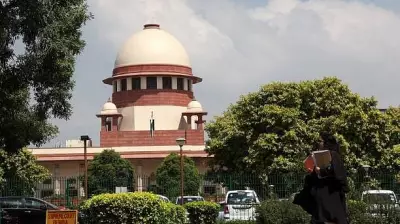
The Supreme Court of India, on Monday, firmly rejected a plea filed by an NGO seeking a change of bench in the Madhya Pradesh High Court. This bench had previously stayed an order to identify a safe storage site away from human habitation for incinerated residue from the Union Carbide factory in Bhopal. The 1984 gas leak from this factory was a catastrophic event that resulted in thousands of deaths, and the ongoing disposal of toxic waste remains a critical environmental and public health concern.
NGO's Arguments and Court's Response
Represented by senior advocate Anand Grover, the 'Bhopal Gas Peedith Sangharsh Sahyog Samiti' argued for two main actions. First, they requested the opening of a concrete storage box containing ash and incinerated residue to test for high mercury content, as suggested by expert opinion. Grover cited Professor Asif Qureshi from IIT-Hyderabad, noting that a 2015 Central Pollution Control Board report indicated mercury levels of 904 mg/kg in the waste. Based on this, he estimated that 337 tons of incinerated waste should contain approximately 49 kg of mercury.
Grover emphasized the scientific inconsistency, pointing out that a 2025 report claimed no mercury was detected. "Scientifically, mercury does not simply disappear; its 'absence' in the 2025 report indicates either a massive environmental leak has occurred or, more likely, the testing process failed to detect it," he stated, highlighting potential groundwater contamination risks at Pithampur if mercury leaked.
Court's Reasoning and Directions
A bench comprising Chief Justice Surya Kant and Justice Joymalya Bagchi dismissed the plea. They noted that the High Court had been actively monitoring the incineration process and had delegated disposal responsibilities to an oversight committee of experts. The Supreme Court directed the petitioner to approach the High Court instead, which could then decide whether to seek the expert committee's response regarding Professor Qureshi's views.
The bench also refused the NGO's request to change the High Court bench that had issued a stay order on December 10. This bench had overturned an earlier October 8 directive, which had rejected the Madhya Pradesh government's proposal to store waste near habitation and instead ordered the identification of a remote site. Grover argued that the December 10 decision ignored safety mandates without new data, but the Supreme Court upheld the High Court's authority, asking the NGO to file a new petition there for expedited consideration.
Background and Implications
The case stems from the long-standing issue of disposing toxic waste from the 1984 Bhopal gas tragedy, one of the world's worst industrial disasters. The ongoing legal battles reflect deep concerns over environmental safety and public health, with mercury contamination posing a significant threat to groundwater and ecosystems. The Supreme Court's decision reinforces the role of lower courts in handling such matters, while underscoring the need for rigorous scientific evaluation and transparent processes in hazardous waste management.
This ruling may impact future environmental litigation in India, as it sets a precedent for judicial deference to specialized oversight committees and highlights the challenges in balancing expert opinions with legal procedures. Stakeholders, including environmental groups and affected communities, will closely watch the High Court's next steps as the NGO prepares to file its petition, seeking to address the alleged discrepancies in mercury testing and ensure safer waste disposal practices.