Supreme Court Dismisses Petitions Against Assam CM, Reinforces High Court Primacy
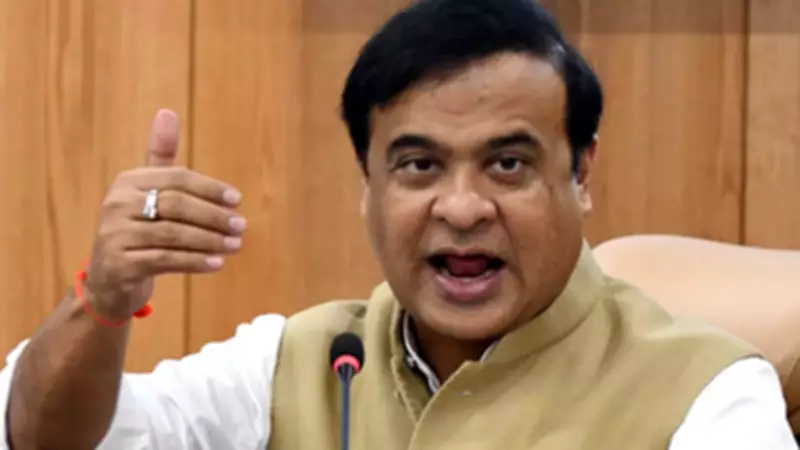
The Supreme Court of India on Monday firmly rejected appeals from the Communist Party of India (CPI), Communist Party of India (Marxist) (CPM), and various prominent individuals to consider petitions demanding the registration of a First Information Report (FIR) and a Special Investigation Team (SIT) probe against Assam Chief Minister Himanta Biswa Sarma. The petitions cited instances of alleged hate speech and a controversial "target shooting" video targeting Muslims.
Constitutional Hierarchy and Judicial Protocol
A bench led by Chief Justice of India Surya Kant, alongside Justices Joymalya Bagchi and Vipul M. Pancholi, questioned the petitioners' decision to bypass the Gauhati High Court. "What prevented you from seeking the same relief from the high court, which possesses broader powers under Article 226 compared to the Supreme Court's authority under Article 32? We cannot undermine the High Courts," the bench asserted. The court highlighted that rushing to the Supreme Court with matters that can be effectively addressed by High Courts not only sidelines these constitutional courts but also contributes to clogging the apex court's docket.
Critique of Political Litigation Trends
The CJI-led bench expressed concern over an emerging pattern of using the Supreme Court as a platform for political battles, particularly during election seasons. "Unfortunately, whenever elections approach, a trend is emerging to rush to the Supreme Court, virtually transforming it into an arena for political conflicts. Is it because political litigation in the Supreme Court ahead of elections garners pan-India publicity? Why should the Supreme Court become a playground for political litigations aimed at publicity?" the bench remarked. This statement underscores the court's frustration with what it perceives as strategic maneuvers to gain national attention through judicial processes.
Disposal and Directions to Petitioners
The bench disposed of the petitions against Chief Minister Himanta Biswa Sarma and advised the petitioners to approach the Gauhati High Court if they wished to pursue the matter further. It requested the High Court to grant an expeditious hearing to any such petitions filed. Additionally, the court appealed to all political parties and their functionaries to exercise mutual respect, restraint, decency, and constitutional morality in their public speeches, emphasizing the importance of maintaining democratic decorum.
Arguments from Petitioners and Judicial Rebuttal
Senior advocate A. M. Singhvi, representing the petitioners, argued vigorously that the case warranted Supreme Court intervention due to the alleged abuse of a constitutional position, violation of the oath of office, and promotion of hatred against a community by a constitutional office-holder. He contended that the Gauhati High Court might not be the appropriate forum for addressing constitutional grievances against the Chief Minister.
In response, the Chief Justice countered, "The Supreme Court has become a convenient forum because renowned advocates are based in Delhi. However, there are equally renowned advocates in High Courts as well. The entire effort appears to be aimed at bypassing the High Court. Why can't the High Court adjudicate these petitions and issue appropriate orders? We cannot render High Courts redundant. I will not allow it."
Rejection of Alternative Forum Suggestion
When Singhvi suggested that it might be preferable for the Supreme Court to direct the petitioners to approach a High Court in a state other than Assam, the CJI took strong exception. "This is another attempt to undermine the Gauhati High Court. You should approach the Gauhati High Court, and if you remain aggrieved by its decision, then you may approach the Supreme Court," the bench stated firmly, reinforcing the principle of judicial hierarchy and the autonomy of state-level courts.
This ruling highlights the Supreme Court's commitment to upholding the constitutional framework and preventing the misuse of judicial processes for political gains, while ensuring that High Courts retain their pivotal role in the Indian legal system.