

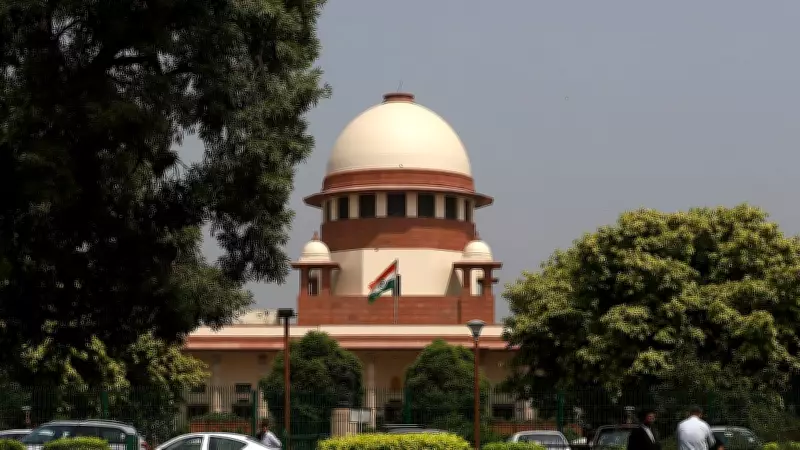
The Supreme Court on Friday declined to entertain a Public Interest Litigation (PIL) that sought a comprehensive protection audit of Sikh religious properties across the country. A bench comprising Chief Justice of India D.Y. Chandrachud and Justice P.S. Narasimha observed that the petition did not present any specific instance of threat or damage to such properties, and therefore, the court could not intervene.
Background of the Petition
The PIL was filed by an organization claiming to represent the interests of the Sikh community, arguing that several gurdwaras and other Sikh religious sites were vulnerable to encroachment, vandalism, and neglect. The petitioner requested the court to direct the central and state governments to conduct a survey and implement measures for their protection.
Court's Reasoning
The bench noted that the petition was based on generalized apprehensions rather than concrete evidence of harm. Chief Justice Chandrachud remarked, "We cannot issue a blanket direction for an audit of all religious properties without specific instances of violation. The remedy lies elsewhere, perhaps with the local authorities or the Shiromani Gurdwara Parbandhak Committee (SGPC)."

Response from the Petitioner
The counsel for the petitioner argued that there have been numerous incidents of encroachment and mismanagement, but the court remained unconvinced. The bench suggested that the petitioner could approach the relevant authorities with specific complaints, and if no action is taken, then consider legal recourse.
Implications
The dismissal of the PIL does not preclude future petitions with more concrete evidence. Legal experts say the judgment reinforces the principle that courts should not entertain vague or sweeping pleas without specific facts. The Sikh community has been advised to document instances of threats to their religious sites and pursue remedies through local bodies or the SGPC.
This decision comes amid ongoing debates about the protection of religious minorities' properties in India. The court's stance underscores the need for petitioners to provide detailed and verifiable information before seeking judicial intervention.






