

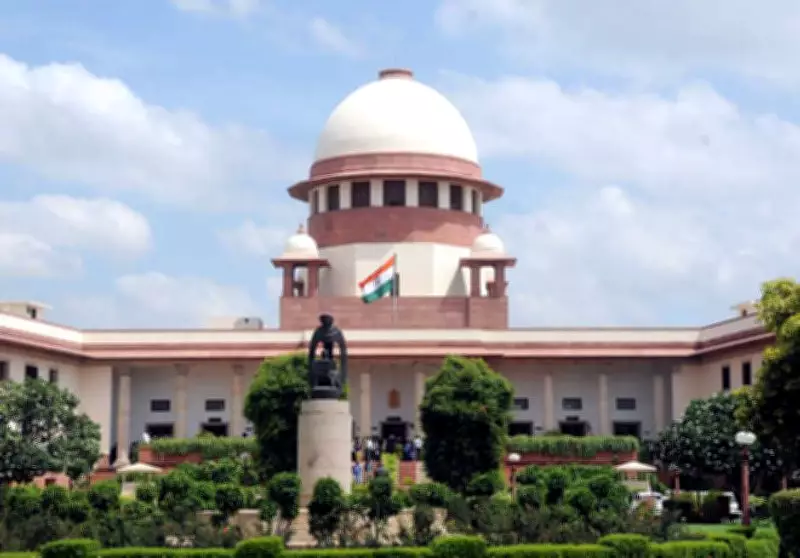
The Supreme Court on Thursday declined to entertain a Public Interest Litigation (PIL) that sought the framing and implementation of guidelines for the time-bound disposal of cases across all courts in the country. Instead, the bench advised the petitioner, who appeared in person, to approach relevant bar bodies for redressal.
Court's Advice to Petitioner
A bench comprising Justice Vikram Nath and Justice V. Mohana directed the petitioner to take up the matter with the Bar Council of India, State Bar Councils, High Court Bar Associations, and District Court Bar Associations. The court emphasized that such issues are best addressed through the established mechanisms of the legal fraternity.
Lighter Moment in Court
During the proceedings, the bench remarked in a lighter vein: "We don't want to get into an enmity with lawyers; we are friends with lawyers." This comment underscored the court's reluctance to impose directives that might be perceived as adversarial to the legal community.

Details of the PIL
The PIL sought the formulation of uniform, structured, and enforceable guidelines to regulate adjournments in all courts nationwide. It also called for a national case flow management policy with stage-wise timelines for proceedings, regulation of adjournments, continuous and day-to-day hearings in appropriate matters, and priority disposal of long-pending and old cases. The petitioner argued that unregulated adjournments contribute significantly to delays in the justice system.
Existing Mechanisms and Challenges
The Supreme Court has previously issued directives to lower courts to avoid unnecessary adjournments and to ensure timely disposal of cases. However, the PIL highlighted that these measures have not been uniformly implemented. The court's decision to refer the petitioner to bar bodies suggests that it views the issue as one requiring collaborative efforts within the legal profession rather than judicial intervention at this stage.
The Bar Council of India and state bar councils have the authority to frame rules and guidelines for the conduct of lawyers, including those related to adjournments. The petitioner is now expected to engage with these bodies to seek the desired reforms.
This development comes amid ongoing efforts to reduce the backlog of cases in Indian courts, which number in the tens of millions. While the Supreme Court's refusal to entertain the PIL may be seen as a setback for those advocating for stricter timelines, the court's suggestion indicates that it prefers a consultative approach involving the legal community.






