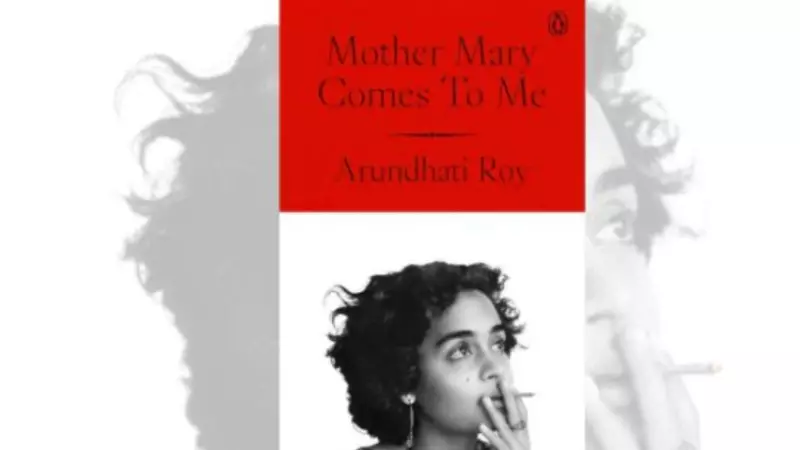
In a significant ruling that underscores the distinction between artistic expression and commercial advertisement, the Supreme Court of India has firmly dismissed a petition that sought action against author Arundhati Roy over the cover of her book. The plea alleged that the cover image, featuring Roy smoking, violated tobacco advertising laws.
Court Questions Motive, Upholds High Court Order
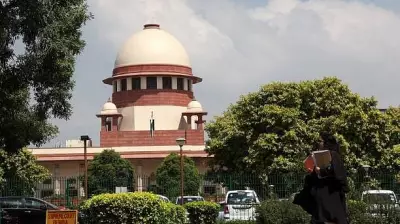
A bench led by Chief Justice of India Surya Kant and comprising Justice Joymalya Bagchi delivered the verdict on Friday, December 5, 2025. The court refused to interfere with an earlier October 13 decision of the Kerala High Court, which had also dismissed the petition. The Supreme Court was hearing a Special Leave Petition (SLP) filed by lawyer Rajasimhan challenging the High Court's order.
During the hearing, CJI Surya Kant pointedly questioned the petitioner's intent. He observed that the book in question, Mother Mary Comes to Me, carries a disclaimer and is authored by an eminent writer published by a renowned house. "The author is an eminent writer who has earned her name in the literary world. The publisher is also renowned. They don't need the assistance of any advertiser," the CJI remarked. He further wondered aloud if the legal plea itself was filed for publicity, asking, "Why for unnecessary publicity?"
The Petitioner's Arguments and the Court's Rebuttal
The petitioner, Rajasimhan, had contended that the front cover image of Arundhati Roy smoking a cigarette flouted the Cigarettes and Other Tobacco Products (Prohibition of Advertisement and Regulation of Trade and Commerce, Production, Supply and Distribution) Act, 2003. He sought sweeping directions to multiple authorities:
- The Centre
- The Press Council of India
- The Kerala Government
His demands included prohibiting the sale, circulation, and display of the book and directing the publisher, Penguin Random House India, to withdraw all copies.
Representing the petitioner, Senior Advocate N Gopakumaran Nair argued that the statutory warning was in "microscopic letters" on the back page and that the front cover should have displayed warnings like 'Smoking is Injurious to Health'.
The Supreme Court bench categorically rejected these arguments. "This is not an advertisement," the bench stated. It clarified that the book, its publisher, or author has no connection to advertising for cigarettes. The court emphasized that a book cover is not equivalent to a promotional hoarding for tobacco. "There is no hoarding in the city with the picture of the book. It is for someone who will take the book and read it. Her picture with it does not portray any such thing," CJI Kant said.
Broader Implications for Artistic Freedom
The ruling carries substantial weight for creative and publishing industries. The court drew a clear line between commercial promotion of a product and the depiction of an author's persona on a book cover. It acknowledged that readers purchase a book for its content and the author's reputation, not for a photograph. The bench also noted that disagreement with an author's views cannot form the basis for such legal action.
By dismissing the plea, the Supreme Court has reinforced the principle that not every depiction of a lawful activity in an artistic or personal context amounts to its advertisement or endorsement under strict statutory laws. The verdict is seen as a affirmation of the space for artistic expression within the framework of existing regulations.