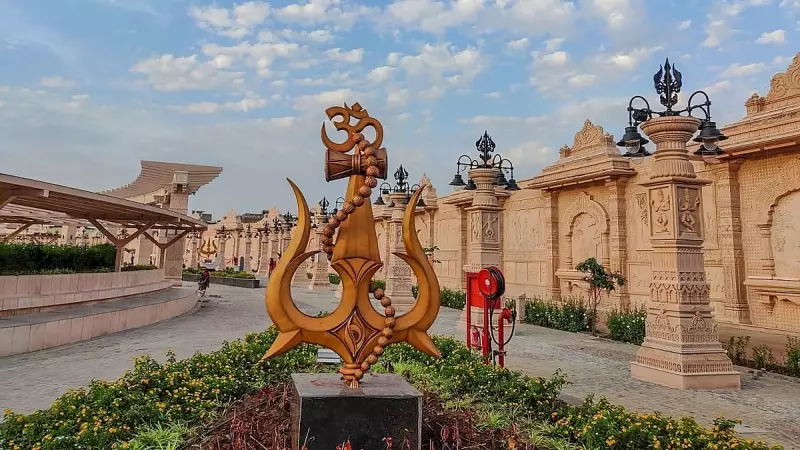
Supreme Court Upholds Temple Autonomy in VIP Darshan Case
The Supreme Court of India has firmly rejected a legal petition that sought to challenge the controversial VIP darshan system at the revered Mahakaleshwar temple in Ujjain, Madhya Pradesh. In a significant ruling, the apex court emphasized that such matters fall squarely within the domain of the temple's own administration, thereby upholding the principle of religious autonomy in temple management.
Bench's Clear Stance on Temple Administration
A distinguished bench comprising Chief Justice of India Surya Kant and Justices R Mahadevan and Joymalya Bagchi delivered the verdict, articulating a clear judicial position. The bench stated unequivocally that decisions regarding the implementation or continuation of VIP darshan practices are internal affairs to be determined by the temple administration itself. This ruling underscores the court's reluctance to interfere in the operational aspects of religious institutions, unless there are compelling legal or constitutional violations involved.
Background of the Petition and Public Debate
The petition had ignited a widespread public debate over the fairness and equity of VIP darshan systems in prominent temples across India. Critics argue that such practices create an unequal access to religious sites, favoring dignitaries and influential individuals over ordinary devotees. However, proponents maintain that these arrangements are necessary for security, logistical efficiency, and to accommodate high-profile visitors without disrupting regular worship services.
In the case of Mahakaleshwar temple, one of the twelve Jyotirlingas and a major pilgrimage destination, the VIP darshan system has been a longstanding tradition. The temple administration has defended it as a practical measure to manage the immense footfall, especially during festivals and special occasions, while ensuring smooth darshan for all visitors.
Implications for Temple Management and Religious Freedom
This Supreme Court decision has broader implications for temple management and religious freedom in India. By deferring to the temple administration, the court has reinforced the autonomy of religious bodies in making operational decisions. This approach aligns with legal precedents that respect the internal governance of religious institutions, provided they adhere to overarching laws and constitutional principles.
Key points from the ruling include:
- Judicial Restraint: The court demonstrated restraint by not intervening in the temple's administrative practices.
- Administrative Discretion: It affirmed that temple administrations have the discretion to implement systems like VIP darshan based on their specific needs and circumstances.
- Public Interest Considerations: While acknowledging public concerns about equality, the court prioritized the temple's right to self-regulation in this instance.
Reactions and Future Outlook
Reactions to the verdict have been mixed. Some devotees and activists express disappointment, hoping for a more egalitarian approach to temple access. Others, including temple authorities and certain religious groups, welcome the decision as a validation of traditional management practices. Legal experts note that this ruling may set a precedent for similar cases involving temple administrations and their operational policies.
Looking ahead, the focus may shift to how temple administrations balance tradition with inclusivity. There is potential for internal reforms or guidelines to ensure that VIP darshan systems are implemented transparently and without undue discrimination. However, as per the Supreme Court's ruling, any such changes would be at the discretion of the temple administration itself.
In conclusion, the Supreme Court's dismissal of the plea against VIP darshan at Mahakaleshwar temple marks a pivotal moment in the intersection of law and religion in India. It highlights the delicate balance between judicial oversight and religious autonomy, with the court opting to uphold the latter in this specific context.