

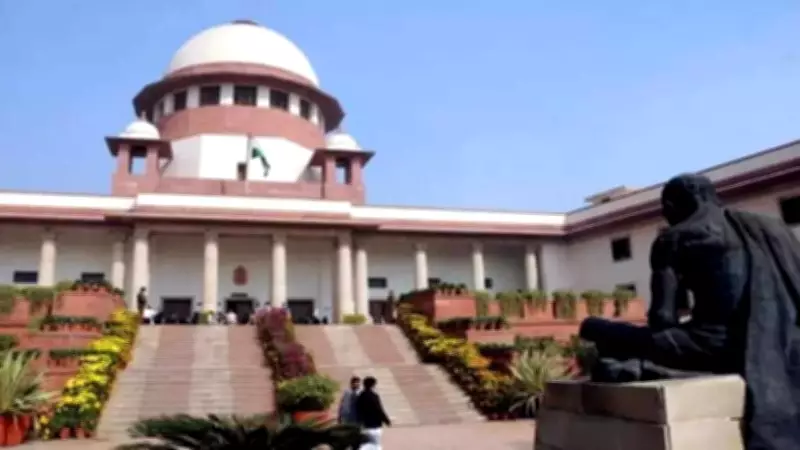
Supreme Court Declines to Entertain Plea Against 'Brahmophobia', Advocates for Universal Fraternity
In a significant ruling on Friday, the Supreme Court of India refused to entertain a plea that sought judicial directions against hate speeches specifically targeting the Brahmin community, a phenomenon the petitioner termed as 'Brahmophobia'. A bench comprising Justices B V Nagarathna and Ujjal Bhuyan underscored the principle that hate speech should not be directed against any community, emphasizing the role of education, intellectual development, tolerance, and patience in fostering societal harmony.
Court's Firm Stance on Hate Speech and Community Protection
The bench articulated a clear and unwavering position, stating, "We don't want hate speech against any community. It depends on education, intellectual development, tolerance and patience. Once everyone follows the fraternity, automatically there will be no hate speech." This statement reflects the judiciary's broader commitment to promoting unity and discouraging divisive rhetoric across all segments of society.
During the proceedings, Justice Nagarathna raised a pertinent question, probing why the petitioner was seeking protection exclusively for one community rather than advocating against hate speech in a universal manner. She pointed out that no individual or group should engage in hate speech, and advised that specific instances of such behavior could be addressed through appropriate legal forums, rather than through direct judicial intervention.

Petitioner's Withdrawal and Broader Allegations
Following the court's remarks, the petitioner, Mahalingam Balaji, opted to withdraw the plea, a decision that the bench permitted. Balaji's petition had called for the central and state governments to formally recognize hate speech targeting Brahmins as a punishable form of caste-based discrimination and to initiate prompt legal actions against offenders.
Additionally, the plea sought a comprehensive investigation into alleged "coordinated domestic or foreign campaigns" aimed at inciting caste conflict by promoting targeted hatred against Brahmins. It also proposed the establishment of a high-level truth and justice commission to examine historical events such as the 1948 Maharashtra Brahmin Genocide and the 1990 Kashmiri Pandit Genocide, recommending measures for rehabilitative, economic, and educational support for survivors and their descendants.
Judiciary's Response to Social Media Criticism
When Balaji raised concerns about the judiciary being targeted on social media platforms, the bench responded with indifference, indicating that it was not preoccupied with false attacks directed at the judicial system. This stance highlights the court's focus on substantive legal issues rather than peripheral criticisms.
The petition had further urged for the disqualification of any public servant or constitutional office holder found guilty of engaging in caste-based hate speech against Brahmins, underscoring the need for accountability among those in positions of power.
This ruling reinforces the Supreme Court's dedication to upholding constitutional values of equality and fraternity, while cautioning against selective appeals that may undermine the inclusive spirit of the law. It serves as a reminder that the fight against hate speech must be all-encompassing, protecting every community without exception.






