

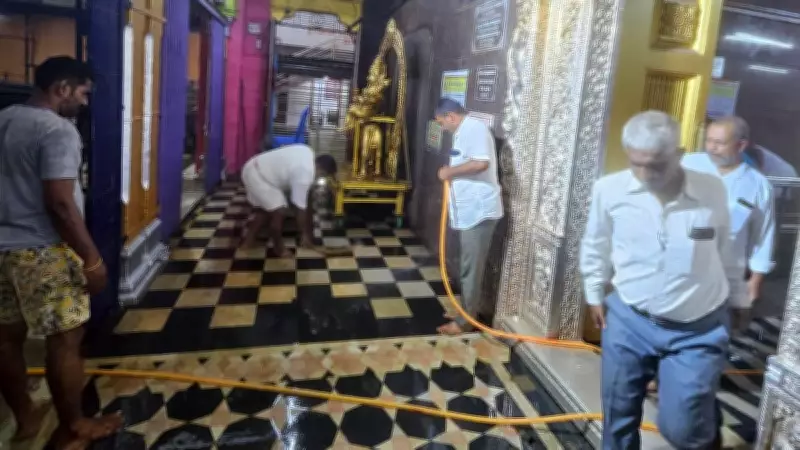
Durgambika Temple Undergoes Ritual Purification Following Alleged Footwear Incident
In a significant development that has stirred religious and political discourse in Karnataka, the Durgambika temple was subjected to a thorough ritual purification process. This action was taken after allegations surfaced that leaders and workers from the Bharatiya Janata Party (BJP) entered the sacred premises while wearing slippers, a practice considered disrespectful in Hindu temple traditions.
Trust Issues Press Statement Detailing the Incident
According to a press note released by the temple trust on Monday night, the incident occurred in the morning hours. The statement explicitly mentioned that Congress party leaders and workers had also visited the temple earlier in the day. They reportedly offered prayers to the deity before commencing a procession, adhering to proper religious customs. However, the focus of the controversy shifted to the subsequent entry by BJP members, who were accused of violating temple etiquette by wearing footwear inside.
Immediate Response and Ritual Cleansing
In response to the alleged breach of protocol, the temple authorities promptly organized a purification ceremony. This ritual, known as 'shuddhi' or cleansing, is performed to restore the sanctity of the temple after any perceived desecration. It involves various traditional practices such as sprinkling holy water, chanting of mantras, and other religious rites to purify the environment. The trust emphasized that this step was necessary to uphold the religious sentiments of devotees and maintain the temple's spiritual integrity.

Political Reactions and Broader Implications
The incident has ignited a heated debate between political factions in Karnataka. Supporters of the Congress party have criticized the BJP for what they describe as a lack of respect for religious norms, while BJP representatives have denied any wrongdoing, calling the allegations politically motivated. This controversy highlights the ongoing tensions in the state's political landscape, where religious sites often become focal points for partisan disputes. It also raises questions about the adherence to cultural and religious protocols by public figures, impacting their public image and voter perception.
Historical and Cultural Context of Temple Etiquette
In Hindu tradition, temples are considered abodes of the divine, and entering them with footwear is strictly prohibited as a sign of reverence and purity. This practice is rooted in ancient customs aimed at maintaining cleanliness and spiritual sanctity. Violations of such norms, especially by political leaders, can lead to widespread outrage among the faithful, as seen in this case. The Durgambika temple, like many others in India, holds significant cultural and religious importance, making any incident of this nature particularly sensitive.
Looking Ahead: Ensuring Future Compliance
Moving forward, temple authorities have announced plans to reinforce guidelines for all visitors, including political dignitaries, to prevent similar occurrences. They are considering measures such as clearer signage, increased awareness campaigns, and stricter enforcement of rules at entry points. This incident serves as a reminder of the delicate balance between political activities and religious respect in India, urging leaders to exercise greater caution in sacred spaces.






