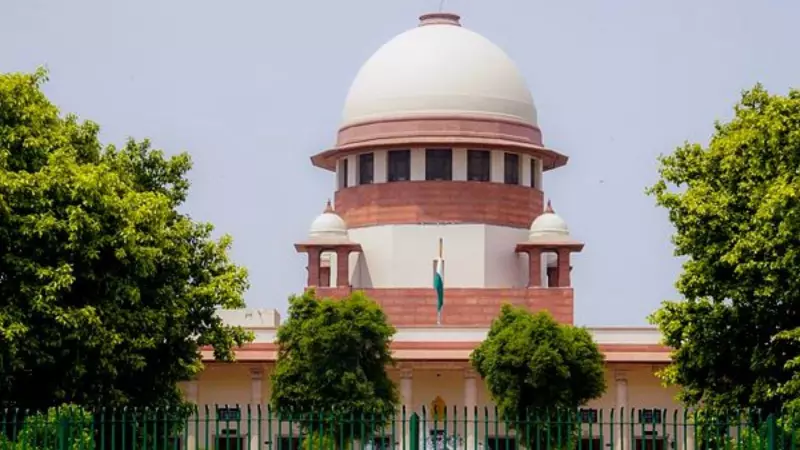
The Supreme Court of India has delivered a significant verdict, stating that no fixed timelines can be imposed on the President and Governors for granting assent to bills. This ruling came in response to a Presidential reference initiated by President Droupadi Murmu, challenging an earlier court judgment that had deemed delays by a Governor as unconstitutional.
The Genesis of the Constitutional Clash
The entire case originates from a pivotal ruling in April 2025. A two-judge bench of the Supreme Court, headed by Justice J.B. Pardiwala, had then declared that the Tamil Nadu Governor’s delay in granting assent to ten pending Bills was unconstitutional. That judgment set specific timelines for action, including a three-month deadline for the President to clear Bills reserved for her consideration.
Challenging this precedent, the Centre approached the Supreme Court through a Presidential reference under Article 143 of the Constitution. Filed on May 13, 2025, this reference posed 14 questions, with the central issue being whether the judiciary can mandate a fixed timeline for Governors to act on Bills passed by elected state assemblies.
Key Arguments Presented Before the Supreme Court
The proceedings saw intense legal debates, with top lawyers representing the Union government and various states putting forth contrasting constitutional interpretations.
The Centre's Stance: A Matter for the Political Sphere
Arguing for the Centre, Solicitor General Tushar Mehta emphasized the doctrine of separation of powers. He contended that the solution to delays does not lie with the judiciary but within the political and democratic process. Mehta asserted that constitutional functionaries are answerable to the people and that problems of this nature should be resolved through political accountability, potentially even requiring a constitutional amendment, rather than judicial intervention.
The States' Counter: Upholding Democratic Integrity
The states, led by Tamil Nadu, West Bengal, Karnataka, Kerala, and Himachal Pradesh, presented a united front advocating for judicial oversight to ensure functional democracy.
Senior Advocate Abhishek Singhvi, for Tamil Nadu, justified the earlier bench's ruling, arguing that laying down time limits was essential given "contemporary realities". He warned that without judicial timelines, the constitutional provisions would be reduced to a "pious declaration but no real teeth," creating a remedyless situation.
Senior Advocate Kapil Sibal, representing West Bengal, clarified that fixing timelines does not amount to amending the Constitution but ensures its machinery functions smoothly. He cautioned against interpretations that would allow a Governor to become "an impediment in the functioning of the Constitution."
Senior Advocate Gopal Subramaniam, for Karnataka, argued that the reference attacks the core principle of the cabinet form of government. He stated that both the President and Governor are titular heads, and ultimate power resides with the cabinet. Endowing them with discretionary power in clearing Bills violates the principle of collective responsibility.
Senior Advocate K.K. Venugopal, for Kerala, stressed that the phrase "as soon as possible" in Article 200 implies acting "forthwith," not "as soon as convenient." He also questioned the validity of the reference itself, suggesting the government should have sought a formal review instead.
Senior Advocate Anand Sharma, for Himachal Pradesh, reinforced that the Governor's office cannot be used to "nullify the will of the people" and that states' autonomy must be respected.
The Verdict and Its Implications
In its final opinion, the Supreme Court ruled against the imposition of fixed timelines and the concept of deemed assent. This decision underscores the court's reluctance to dictate a specific timeframe for constitutional functionaries, placing the onus back on the political process. However, the detailed arguments have highlighted the ongoing tension between state legislatures and the gubernatorial office, a conflict that continues to shape India's federal dynamics. The ruling leaves the door open for political and legislative solutions to address inordinate delays in the future.