

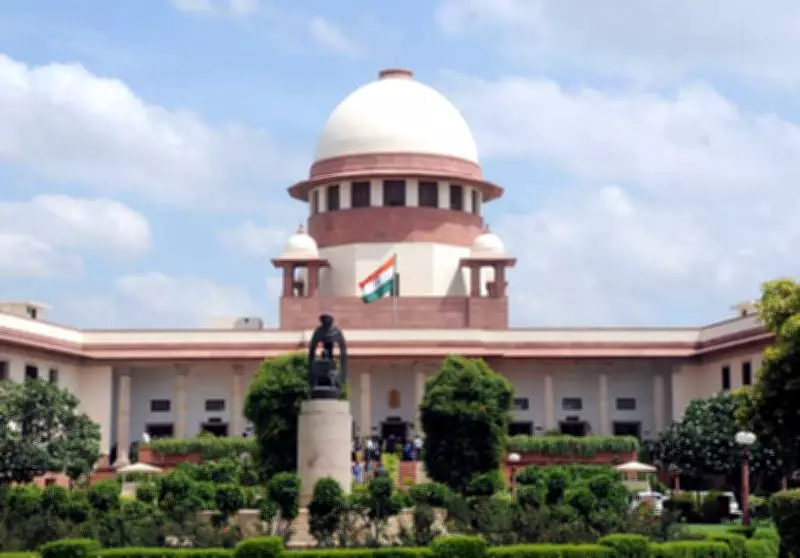
Supreme Court Reverses Delhi High Court Verdict on Sujan Singh Park Eviction
In a major legal development, the Supreme Court of India has overturned a Delhi High Court judgment that had ordered the Central government to vacate residential premises located at Sujan Singh Park, a prestigious area near Khan Market in Delhi. This reversal marks a pivotal moment in the ongoing property dispute, with the apex court setting aside the lower court's directive, thereby providing relief to the Centre in this high-profile case.
Background of the Property Dispute
The dispute centers around residential properties at Sujan Singh Park, a prime locality known for its upscale housing and proximity to Khan Market, one of Delhi's most expensive commercial areas. The Delhi High Court had previously ruled in favor of evicting the Central government from these premises, citing legal grounds that required the vacation of the properties. However, the Supreme Court's recent intervention has now reversed this decision, citing different interpretations of the law and property rights involved.
This case has drawn significant attention due to the valuable real estate in question and the involvement of government entities. The Supreme Court's verdict emphasizes the complexities of property laws in India, particularly when it involves government-held residential spaces in sought-after urban locations.

Legal Implications and Court Proceedings
The Supreme Court's ruling underscores the importance of judicial review in property disputes, highlighting how higher courts can overturn lower court decisions based on legal merits. In this instance, the apex court found that the Delhi High Court's order to vacate the premises was not justified under the prevailing legal framework, leading to its reversal.
Key aspects of the Supreme Court's decision include:
- Reassessment of Property Rights: The court re-evaluated the ownership and usage rights of the residential premises at Sujan Singh Park, concluding that the Centre's occupancy was legally permissible.
- Interpretation of Eviction Laws: The judgment clarified the application of eviction laws in cases involving government properties, setting a precedent for similar disputes in the future.
- Impact on Government Housing: This reversal may affect how government residential accommodations are managed in prime areas, potentially influencing policy decisions on property allocation and eviction procedures.
The proceedings involved detailed arguments from both sides, with the Centre defending its right to retain the premises, while opposing parties sought enforcement of the High Court's eviction order. The Supreme Court's thorough examination of the case led to the conclusion that the earlier verdict was flawed, necessitating its overturn.
Broader Context and Future Outlook
This case is part of a larger trend of property disputes in Delhi, where land and housing in central locations like Khan Market are highly contested due to their commercial and residential value. The Supreme Court's decision not only resolves this specific issue but also contributes to the legal discourse on property rights and government accommodations in urban centers.
Looking ahead, the reversal could lead to:
- Increased Scrutiny: Future cases involving government properties may face more rigorous legal scrutiny, with courts likely to consider this verdict as a reference point.
- Policy Revisions: The government might review its policies on residential premises in prime areas to avoid similar legal challenges.
- Market Reactions: Real estate markets in and around Khan Market could see shifts in property values and demand, influenced by the stability of government holdings in such locales.
Overall, the Supreme Court's action in reversing the Delhi High Court verdict highlights the dynamic nature of India's legal system and its role in adjudicating complex property matters. This case serves as a reminder of the intricate balance between property rights, government interests, and judicial oversight in high-stakes urban disputes.






