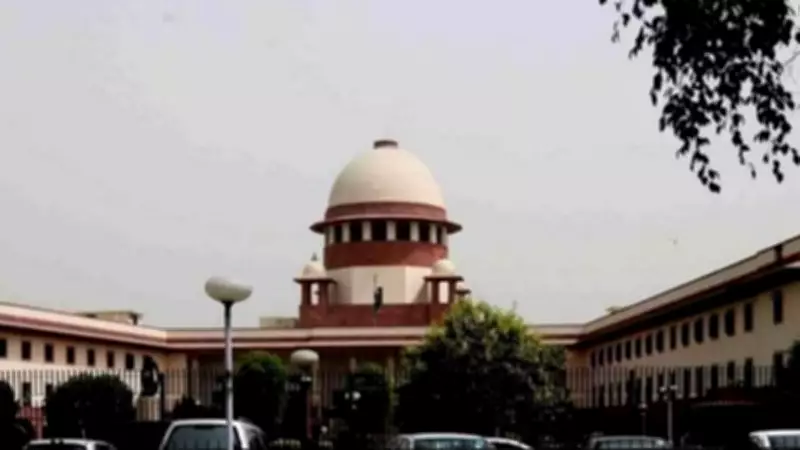
Supreme Court Directs Centre to File Action-Taken Report on SC/ST Sub-Classification Verdict
The Supreme Court of India has taken a significant step towards ensuring the implementation of its landmark 2024 judgment on reservation policies. On Tuesday, a bench comprising Chief Justice of India Surya Kant and Justices Joymalya Bagchi and N V Anjaria ordered the Union of India to submit an affidavit detailing the action taken in response to the Constitution bench ruling that permitted sub-classification within Scheduled Castes and the extension of the creamy layer principle to SCs and STs.
Background of the Case and Court's Directive
The directive came during a hearing on an application filed by O P Shukla, president of the National Coordination Committee for Revision of Reservation Policy, through Advocate Purushottam Sharma Tripathi. The application, part of pending petitions by Shukla and the 'Samta Andolan Samiti', sought enforcement of the August 1, 2024, judgment. The petitioners argued that after the verdict, the responsibility for execution lay with the government, prompting the court to seek a comprehensive report on the steps taken so far.
The bench explicitly ordered, "Let the Union of India file an affidavit along with Action Taken Report pursuant to the Constitution Bench judgment of this court in The State of Punjab & Others vs Davinder Singh & Others." This move underscores the judiciary's commitment to monitoring the implementation of its decisions to achieve substantive equality in affirmative action policies.

Details of the 2024 Constitution Bench Judgment
In a historic 6:1 majority ruling on August 1, 2024, a seven-judge Constitution bench, presided over by then Chief Justice of India D Y Chandrachud, overturned the Supreme Court's 2004 judgment in E V Chinnaiah vs State of Andhra Pradesh. The earlier decision had held that Scheduled Castes form a homogeneous group and cannot be sub-categorized. The 2024 verdict, however, recognized empirical evidence indicating inequality within SCs, stating that they are "not a homogeneous integrated class."
The majority ruling affirmed that sub-classification is constitutionally permissible and necessary for the equitable distribution of reservation benefits. It also supported the exclusion of the creamy layer from SCs and STs to ensure that affirmative action reaches the most marginalized sections. Justice B R Gavai, in a concurring opinion, emphasized that the state must develop a policy to identify the creamy layer within these groups, asserting that "only this and this alone can achieve the real equality as enshrined under the Constitution."
Dissenting Opinion and Subsequent Developments
Justice Bela M Trivedi, the lone dissenter in the 2024 case, maintained that Scheduled Castes constitute a homogeneous class and should not be altered by state interventions. She rejected arguments that sub-classification would interfere with the Presidential List under Article 341 of the Constitution, viewing it as a violation of constitutional provisions.
Following the judgment, review petitions challenging the seven-judge bench order were dismissed by the Supreme Court on September 24, 2024, reinforcing the finality of the decision. This series of legal actions highlights the ongoing judicial scrutiny aimed at refining reservation policies to address intra-group disparities and promote genuine social justice.
Implications for Reservation Policy and Future Steps
The Supreme Court's latest directive to the Centre marks a critical phase in the evolution of India's reservation framework. By seeking an action-taken report, the court is ensuring accountability and timely execution of its verdict, which could lead to more targeted and effective affirmative action measures. This development is poised to impact millions of beneficiaries by potentially reallocating reservation benefits to the neediest within SC and ST communities, thereby advancing the constitutional goal of equality.
As the Centre prepares its report, stakeholders across the political and social spectrum will be closely watching the government's response. The outcome could set a precedent for how judicial mandates on sensitive issues like reservation are implemented, balancing legal principles with practical governance challenges.