

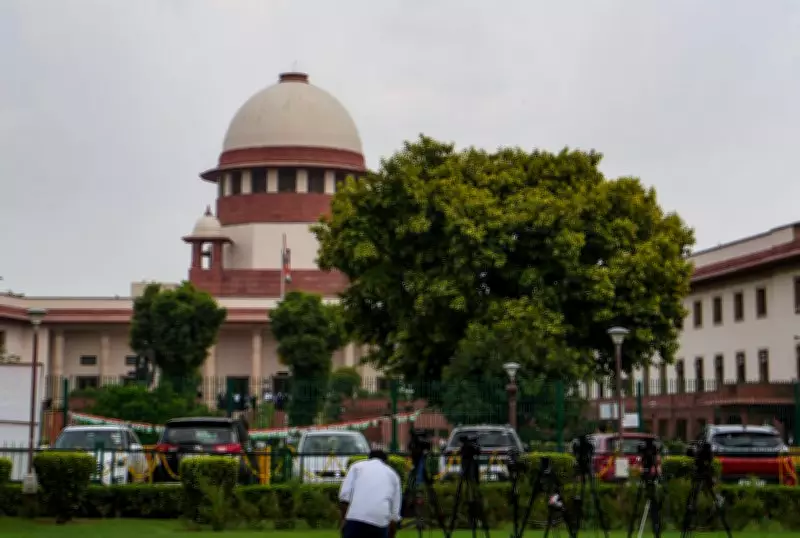
Supreme Court Directs National Mission for Clean Ganga to File Detailed Report on River Encroachments
In a significant move to address environmental degradation, the Supreme Court of India has issued a directive to the National Mission for Clean Ganga Authority (NMCGA), demanding a comprehensive and detailed report on the current status of illegal encroachments along the banks and basins of the River Ganga. This order comes as a response to growing concerns over large-scale unauthorized constructions that threaten the river's ecosystem and flood plains.
Judicial Bench Expresses Serious Concern Over Encroachments
A Bench comprising Justice JB Pardiwala and Justice KV Viswanathan expressed grave apprehension after reviewing a 2024 affidavit from the NMCGA. The affidavit highlighted widespread encroachments across the banks and periphery of the Ganga in several states, including Uttarakhand, Delhi, Haryana, Rajasthan, Uttar Pradesh, Bihar, Jharkhand, West Bengal, and Chhattisgarh. Noting that the affidavit was two years old, the court emphasized the need for updated information to assess the current situation accurately.
Scope of the Ganga River Basin and Affected Regions
The Ganga, one of India's most sacred and vital rivers, flows directly through five states: Uttarakhand, Uttar Pradesh, Bihar, Jharkhand, and West Bengal. However, its river basin extends further, encompassing six additional states and Union territories: Himachal Pradesh, Haryana, Rajasthan, Delhi, Madhya Pradesh, and Chhattisgarh. This broad geographical spread underscores the complexity of managing encroachments and implementing conservation efforts across diverse regions.

- The NMCGA must submit a report detailing the current status of encroachments in all affected states and Union territories.
- The report should outline steps taken so far to implement the clauses of the October 7, 2016 notification issued by the Ministry of Water Resources, River Development and Ganga Rejuvenation under the Environment (Protection) Act, 1986.
- It must identify impediments or hurdles hindering the effective execution of the notification and propose measures to overcome them.
- The status of flood plain demarcation in each state must be clearly indicated in the report.
Legal Proceedings and State Responses
The Supreme Court has issued notices to all relevant states and posted the matter for further hearing on April 23. During the proceedings, advocate Akash Vashishtha, representing appellant Ashok Kumar Sinha, argued that immediate attention is required due to the scale of encroachments. He also pointed out that some riverbank areas are rich in freshwater dolphins, highlighting the ecological urgency of the issue.
In a specific instance, the Bihar Government counsel informed the Bench that out of 213 identified encroachments, 58 have been demolished. However, the removal of the remaining 145 encroachments has been stalled due to interim orders from the Patna High Court and various district courts, illustrating the legal challenges in enforcement.
Government's Role and Future Directions
The Bench has asked Additional Solicitor General Aishwarya Bhati to seek instructions on what directions the Authority would like the Supreme Court to issue to ensure meaningful implementation of the notification. This step aims to align judicial oversight with the Government of India's mission to make the river plains and banks of the Ganga absolutely free of all encroachments.






