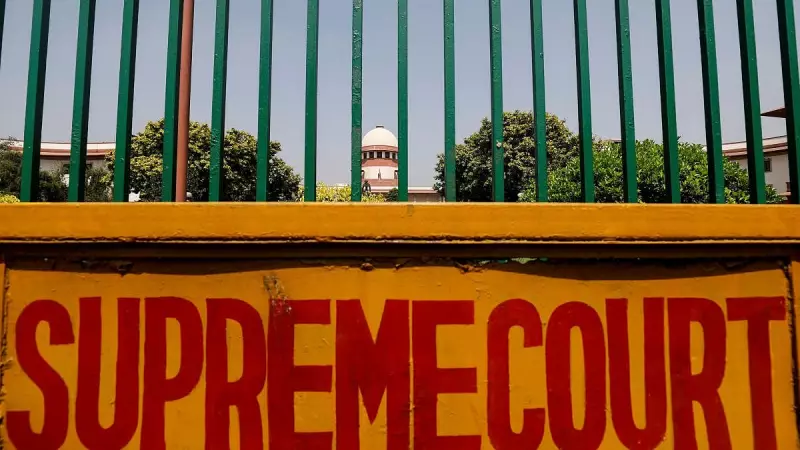
The Supreme Court of India has raised a crucial question about the legal protection available to persons with disabilities, specifically asking why there isn't a stringent law equivalent to the SC/ST Act to safeguard their dignity. This significant observation came during a hearing on November 27, 2025.
Court's Landmark Observation
The bench was addressing a writ petition filed by the Cure SMA Foundation, a disability rights organization. The petition sought legal action against some comedians who had publicly mocked a person with physical disabilities in a viral video. The court expressed deep concern over the incident and the inadequate legal framework to address such discrimination.
During the proceedings, the justices highlighted the effectiveness of the Scheduled Castes and Scheduled Tribes (Prevention of Atrocities) Act in protecting marginalized communities from humiliation and discrimination. They questioned the absence of similar robust legal mechanisms for persons with disabilities, despite constitutional guarantees of equality and dignity for all citizens.
The Triggering Incident
The case reached the Supreme Court after the Cure SMA Foundation approached the judiciary seeking justice. The foundation argued that the video content, where comedians deliberately mocked an individual's physical disability, constituted a serious violation of fundamental rights and human dignity.
The petitioner emphasized that such acts of public mockery not only harm the individual concerned but also reinforce harmful stereotypes and create a hostile environment for the entire disability community. The foundation sought the court's intervention to establish stronger legal precedents for protecting disability rights in India.
Potential Legal Implications
The Supreme Court's questioning signals a potential turning point in disability rights jurisprudence in India. By comparing the existing legal protection for persons with disabilities with the stringent provisions of the SC/ST Act, the court has opened up possibilities for legislative reform.
Legal experts believe this observation could lead to either amendments in the existing Rights of Persons with Disabilities Act, 2016 or the creation of new legal provisions specifically addressing discrimination and atrocities against persons with disabilities. The court's stance emphasizes that dignity and equal treatment are non-negotiable rights that require strong legal backing.
The case continues to be heard, with the Supreme Court expected to deliver a landmark judgment that could reshape disability rights protection in India. The decision could establish new standards for accountability when persons with disabilities face discrimination, mockery, or humiliation in public spaces or media.