

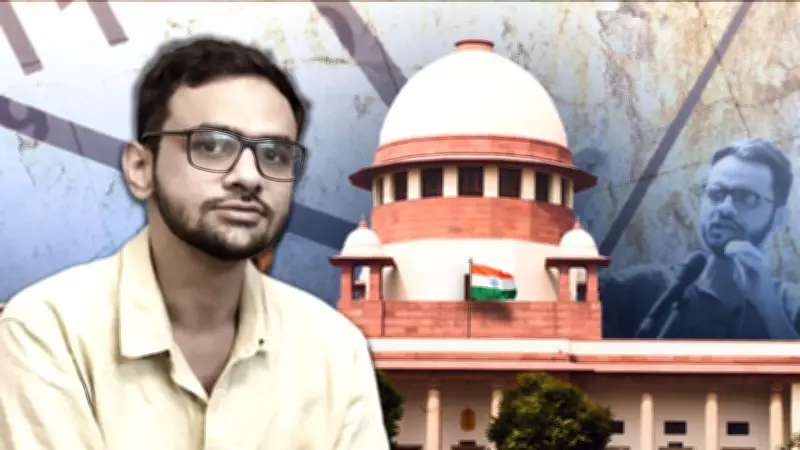
The Supreme Court of India has raised serious reservations over the denial of bail to former Jawaharlal Nehru University (JNU) student leader Umar Khalid in the Delhi riots conspiracy case. A division bench of the apex court observed that the principle of 'bail is the rule and jail is the exception' applies even under stringent laws like the Unlawful Activities (Prevention) Act (UAPA).
Supreme Court's Observations
Referring to the three-judge bench ruling in the Najeeb case, the Supreme Court stated that an accused cannot be kept in custody indefinitely without trial. The bench also expressed reservations over earlier orders that rejected Umar Khalid's bail plea and barred him and co-accused Sharjeel Imam from seeking bail for a period of one year.
The court emphasized that personal liberty is a fundamental right and cannot be curtailed arbitrarily, even in cases involving anti-terror laws. The observations are being seen as significant remarks on the importance of personal liberty and the need to prevent prolonged incarceration under stringent legislation.

Implications of the Ruling
The Supreme Court's stance is expected to have far-reaching implications for cases under the UAPA and other anti-terror laws. Legal experts believe that the judgment reinforces the principle that bail should not be denied solely based on the nature of the charges, and that the right to a speedy trial must be upheld.
The case has garnered widespread attention, with many viewing it as a test of the judiciary's commitment to protecting individual freedoms against the backdrop of national security concerns. The Supreme Court's observations are likely to influence future bail hearings in similar cases.






