Supreme Court Delivers Landmark Ruling on Spectrum Ownership and Insolvency
In a significant judgment, the Supreme Court of India has unequivocally held that telecom companies cannot assert ownership rights over the spectrum allocated to them by the government. The court ruled that this natural resource is exempt from the insolvency and liquidation processes under the Insolvency and Bankruptcy Code (IBC), dealing a blow to banks seeking to recover debts from bankrupt telecom firms.
Bench Rejects Banks' Plea on Spectrum as Asset
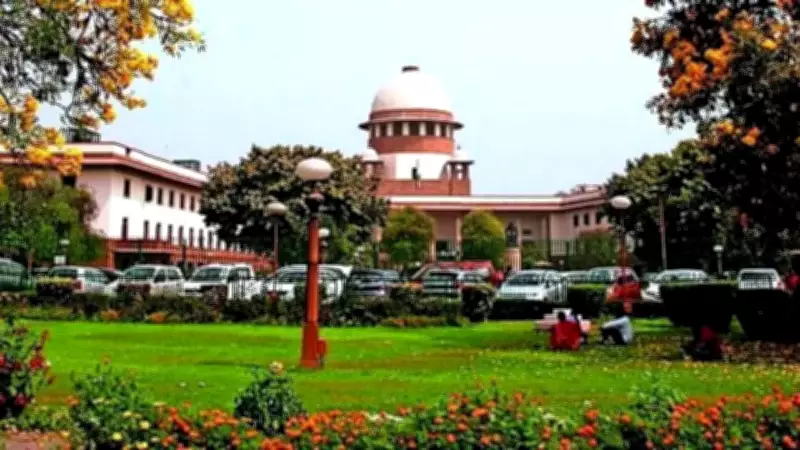
A bench comprising Justices P S Narasimha and A S Chandurkar dismissed the arguments presented by banks, which contended that licensed spectrum could be treated as an asset and sold off to recoup loans extended to insolvent telecom companies. The court overturned a previous order by the National Company Law Appellate Tribunal (NCLAT) in the Aircel group insolvency case, which had permitted spectrum usage rights to be considered as assets of a corporate debtor and transferable during insolvency or liquidation.
This decision represents a major setback for financial institutions with substantial exposure to the telecom sector, as it limits their avenues for debt recovery in cases of corporate bankruptcy.

Clarification on Spectrum as an Intangible Asset
Justice Narasimha, authoring the judgment, elaborated that while spectrum licensing rights are recognized as intangible assets on balance sheets, this does not equate to ownership transfer. "Recognition of spectrum licensing rights as an intangible asset in the balance sheet is not determinative of recognition or transfer of ownership of the spectrum to telecom service providers," the bench stated.
The court emphasized that such recognition merely indicates control over future economic benefits derived from the right to use spectrum. Even though spectrum rights exhibit property-like characteristics—such as long licensing terms, exclusivity, transferability, and tradability—these attributes are merely components of a bundle of rights and do not confer complete ownership on telecom companies.
IBC Framework Excludes Non-Owned Assets
Justice Narasimha further clarified that the grant of a telecom license, including spectrum usage rights, does not effect a transfer of ownership or proprietary interest. "What is conferred is a limited, conditional, and revocable privilege to use spectrum for specified purposes and for a defined duration," the bench noted.
The judgment concluded that the IBC framework explicitly excludes assets over which the corporate debtor lacks ownership rights. "In the absence of transfer of title over the spectrum, no ownership rights are created in telecom service providers either in the spectrum or in its right to use as governed by licensing conditions," the court asserted. Consequently, spectrum licensing rights are not part of the asset pool available for insolvency or liquidation proceedings.
Government Retains Control Over Spectrum
The Supreme Court highlighted that the license agreement ensures the government retains effective and pervasive control over the spectrum. Licensee rights are subject to regulatory oversight, disclosure obligations, restrictions on transfer, and the government's authority to suspend or terminate licenses in cases of breach, liquidation, or winding up of the telecom company.
This ruling reinforces the principle that spectrum, as a public resource, remains under government stewardship, with telecom operators holding only usage privileges rather than proprietary claims.