Supreme Court Divided Over Religious Composition of SIT in Akola Violence Case
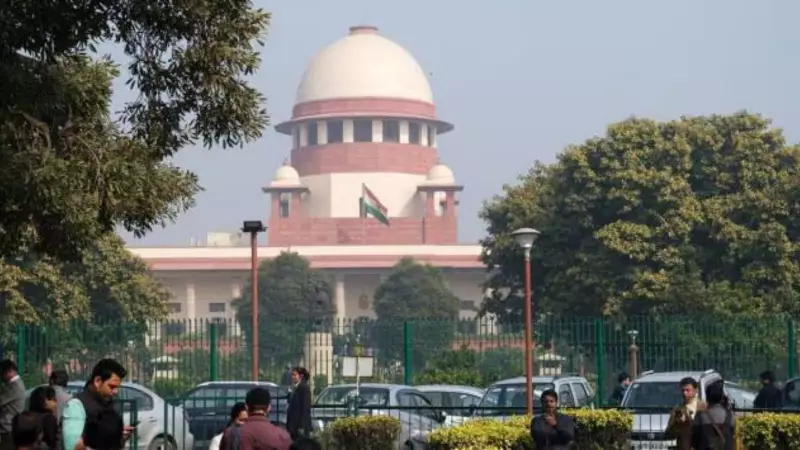
The Supreme Court of India has delivered a split verdict on a petition challenging its earlier order directing the formation of a Special Investigation Team (SIT) comprising both Hindu and Muslim police officers to probe the 2023 communal clashes in Akola, Maharashtra.
The division bench of Justices Sanjay Kumar and S C Sharma gave differing opinions on Friday, November 7, 2025, regarding the review petition filed by the Maharashtra state government against the court's September 11 order.
Conflicting Judicial Opinions
Justice Sanjay Kumar, who authored the original verdict, firmly dismissed the review petition, stating that "on merits, no ground is made out to review the order." He emphasized that the direction for a religiously balanced SIT was necessary given the circumstances of the case.

However, Justice S C Sharma took a contrasting view, stating that the question of constituting an SIT on the basis of religious identity "requires consideration." He directed that notices be issued to the respondents, making the case returnable within two weeks.
Background of the Akola Violence
The legal battle stems from violent clashes that erupted in the Old City area of Akola in May 2023 after a social media post about the Prophet went viral. The unfortunate incident resulted in the death of Vilas Mahadevrao Gaikwad and injuries to eight people, including the petitioner Mohammad Afzal Mohammad Sharif.
According to the petitioner's allegations, four individuals assaulted Gaikwad with dangerous weapons including a sword and an iron pipe during the communal violence.
Justice Kumar's Reasoning
In his detailed response to the review petition, Justice Kumar addressed the state's concern that the SIT composition direction would "impinge upon the principle of institutional secularism." He noted that this argument overlooked the court's specific observation about police failure in discharging their duties objectively.
"The facts set out in the order clearly demonstrate that despite information being given as to the commission of a cognizable offence, neither the officers of the police station concerned nor the Superintendent of Police took necessary action by at least registering an FIR, clearly manifesting total dereliction of duty on their part," Justice Kumar wrote.
The judge further explained that since the case related to communal riots involving Hindu and Muslim communities, and prima facie hinted at religious bias, it was necessary to direct the constitution of an investigation team comprising senior police officers of both communities to maintain transparency and fairness in the investigation.
Legal Precedent Cited
Justice Kumar referenced the 2024 judgment in Balram Singh vs Union of India, which discussed India's unique interpretation of secularism. The judgment stated that while the State neither supports nor penalizes any religion, state machinery ultimately comprises members of different religions and communities.
"Therefore, transparency and fairness in their actions must be manifest in matters even remotely touching upon secularism and religious oppression," the cited judgment noted, supporting the concept of inclusive investigation teams in communal violence cases.
Current Status and Next Steps
With the split verdict, the case will now be referred to a larger bench of the Supreme Court for final determination. The core legal question remains whether directing the religious composition of an SIT violates principles of institutional secularism or serves to ensure investigative fairness in communally sensitive cases.
The Maharashtra Home Ministry had been directed in the original September 11 order to constitute the SIT comprising senior police officers from both Hindu and Muslim communities to investigate all allegations made by petitioner Mohammad Sharif, including registering an FIR concerning the assault upon him on May 13, 2023.
The Akola violence case continues to highlight the challenges in ensuring impartial investigations in communally charged situations, with the Supreme Court's eventual decision likely to set important precedents for similar cases across India.