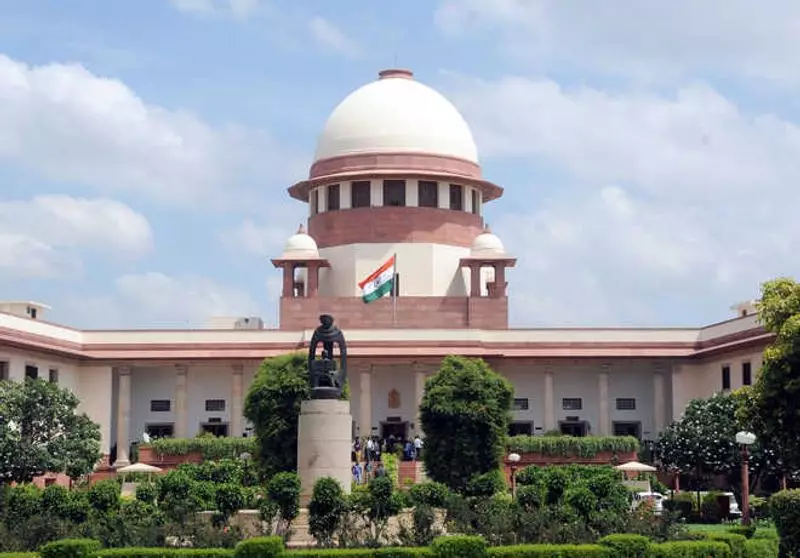
The Supreme Court of India has delivered a significant split verdict on the Maharashtra government's plea seeking a review of its earlier decision that mandated a court-monitored Special Investigation Team (SIT) probe into the 2022 Akola communal riots. This development creates legal uncertainty around the investigation into the violent clashes that rocked the Maharashtra city.
Divided Bench Creates Legal Impasse
In a remarkable turn of events, the two-judge bench comprising Justice Bela M. Trivedi and Justice Pankaj Mithal found themselves in complete disagreement. Justice Trivedi dismissed the Maharashtra government's review petition, while Justice Pardiwala took the opposite position, allowing the review plea.
The split verdict means the case will now be referred to the Chief Justice of India for consideration before a larger bench. This creates a temporary stalemate in the legal proceedings surrounding the investigation into the Akola violence that occurred in November 2022.

Background of the Akola Communal Clashes
The legal battle stems from the communal violence that erupted in Akola, Maharashtra, following protests over certain social media posts. The clashes between Hindu and Muslim communities resulted in significant damage to property and injuries to individuals.
Initially, the investigation was handled by the local police, but concerns were raised about the fairness and transparency of the probe. This led to the Supreme Court's earlier intervention where it ordered the formation of a court-monitored SIT to ensure an impartial investigation into the riots.
Maharashtra Government's Position and Legal Arguments
The Maharashtra government, through its plea, argued that the state machinery was fully capable of conducting a fair investigation without the need for Supreme Court monitoring. The state maintained that it had already taken appropriate action and that the formation of an SIT undermined the state's investigative capabilities.
The government's legal team emphasized that the state police had properly registered cases and made arrests in connection with the riots. They contended that the Supreme Court's original order for a court-monitored SIT was unnecessary and interfered with the state's constitutional responsibilities.
What Happens Next in the Legal Process
With the bench delivering a split verdict, the case automatically goes to the Chief Justice of India for directions. The CJI will likely constitute a larger bench, possibly a three-judge bench, to hear the matter afresh and deliver a conclusive judgment.
This development means that the implementation of the court-monitored SIT remains in limbo until the larger bench makes a final determination. The legal uncertainty could potentially delay the investigation into the sensitive communal violence case that has drawn significant public attention.
The split verdict highlights the complex legal questions surrounding the balance between state autonomy in law enforcement and judicial oversight in sensitive cases involving communal violence. The final outcome will set an important precedent for how similar cases are handled in the future.