

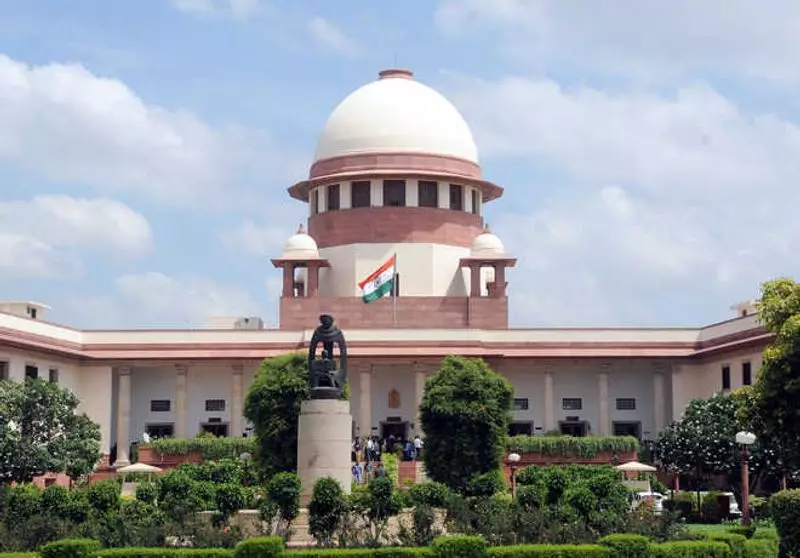
Supreme Court Issues Split Verdict on Sanction Rule for Government Servants
The Supreme Court of India has delivered a split verdict in a crucial case concerning Section 17A of the Prevention of Corruption Act. This section mandates that investigators must obtain prior sanction before probing government servants for alleged corruption offenses. The bench, comprising two judges, could not reach a unanimous decision, leaving the legal matter unresolved for now.
Details of the Split Verdict
In this significant ruling, the two-judge bench expressed differing opinions on the interpretation and application of Section 17A. One judge upheld the requirement for prior sanction, emphasizing the need to protect government servants from frivolous or malicious investigations. The other judge, however, argued that such a mandate could hinder the timely and effective prosecution of corruption cases, potentially allowing wrongdoers to evade scrutiny.
The split verdict means that the issue will likely be referred to a larger bench of the Supreme Court for a final determination. This development has sparked widespread debate among legal experts, anti-corruption activists, and government officials across India.

Implications for Corruption Investigations
Section 17A was introduced as an amendment to the Prevention of Corruption Act to provide safeguards for public servants. It requires that any investigation into offenses under the Act involving government employees must have prior approval from a competent authority. Proponents argue that this prevents harassment and ensures that only genuine cases proceed, while critics contend it creates unnecessary delays and obstacles in fighting corruption.
With the Supreme Court's split verdict, the legal landscape remains uncertain. Investigations into corruption cases involving government servants may face procedural ambiguities until a larger bench resolves the matter. This situation could impact ongoing and future cases, potentially affecting the pace and outcome of anti-corruption efforts in the country.
Reactions and Next Steps
Legal analysts have noted that split verdicts are not uncommon in complex constitutional or statutory interpretation cases. They often lead to further judicial review to establish clarity. In this instance, the case is expected to be listed before a three-judge or larger bench to provide a conclusive ruling.
Stakeholders, including the Central Bureau of Investigation (CBI) and other investigative agencies, are closely monitoring the developments. The outcome will have significant ramifications for how corruption probes are conducted in India, balancing the rights of government servants with the imperative to combat corruption effectively.
As the legal process continues, the Supreme Court's eventual decision will be pivotal in shaping the framework for accountability and transparency in public service.






