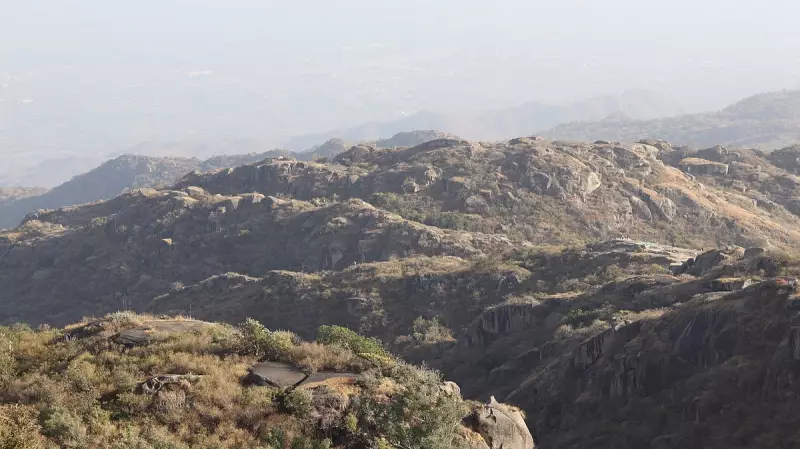
In a significant development concerning the protection of the ecologically fragile Aravalli range, the Supreme Court of India has decided to temporarily suspend its own earlier directions. The court's move puts in abeyance its November 20 order that had accepted a uniform definition for identifying the Aravalli hills and ranges.
Court Proposes Expert Committee for Holistic Review
A vacation bench of the apex court, led by Chief Justice Surya Kant and including Justices J K Maheshwari and Augustine George Masih, proposed the formation of a specialized panel. This body, to be constituted as a high-powered committee, will comprise domain experts from relevant fields. Its primary mandate will be to undertake what the bench described as an "exhaustive and holistic examination" of the entire issue surrounding the definition and delineation of the Aravalli landscape.
Background and Implications of the Decision
The court's decision on 29 December 2025 marks a pivotal shift in approach. The earlier November order for a uniform definition was seen as a critical step towards stronger environmental conservation, aiming to prevent illegal mining and construction in the ecologically sensitive zones of the Aravallis. By now putting that directive on hold and opting for a committee-based review, the Supreme Court acknowledges the complexity of the matter.
The proposed committee is expected to delve into scientific, geological, and environmental data to arrive at a comprehensive understanding. This step suggests the court seeks a more nuanced and technically sound framework before implementing any final, binding definition that will govern protection measures for the ancient hill range.
What Happens Next?
The immediate consequence is that the status quo regarding the Aravalli definition remains fluid until the high-powered committee completes its examination and submits its findings. This development is being closely watched by environmental activists, state governments of the region, and real estate and mining interests. The final outcome will have long-lasting repercussions for environmental protection policies in North India, impacting biodiversity, groundwater recharge, and urban sprawl in the National Capital Region and beyond.
The Supreme Court's intervention underscores the legal and ecological importance of the Aravalli range. The formation of an expert panel indicates a move towards a decision grounded in specialized knowledge, potentially setting a precedent for how complex environmental matters are adjudicated in the future.