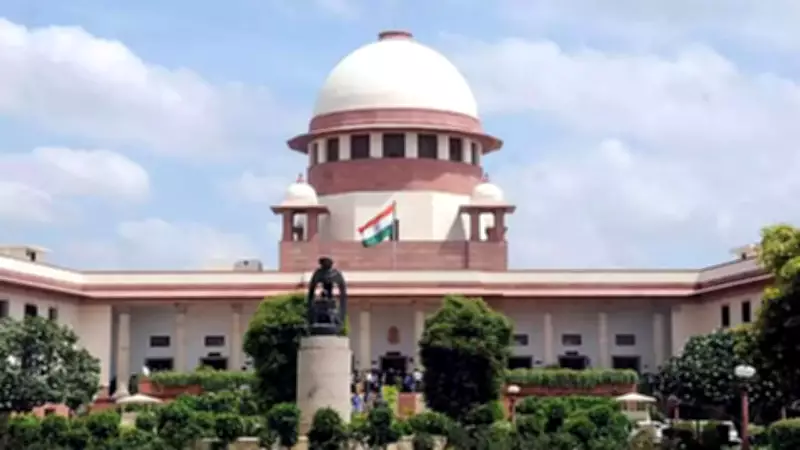
Supreme Court Intervenes in Talaq-e-Hasan Divorce Case, Orders Mediation
In a landmark judicial intervention, the Supreme Court of India has taken an unprecedented step by putting on hold a lawyer's attempts to divorce his wife through the Islamic practice of talaq-e-hasan. The court has directed the estranged couple to undergo mediation in pursuit of an amicable resolution to their marital dispute, despite the husband having remarried after the initial divorce pronouncement in 2022.
Legal Battle Over Divorce Validity
The case centers on advocate Yusuf Naqi, who first issued talaq-e-hasan to his wife, Benazeer Heena, in 2022. Talaq-e-hasan involves the pronouncement of divorce three times, with each instance separated by a month. Following this, Naqi proceeded to remarry. However, Heena challenged the validity of the divorce in a petition to the Supreme Court, arguing that it left her destitute due to the absence of maintenance provisions under Muslim personal law.
Heena contended that she could not remarry herself, as she did not consider the divorce legally valid. Her legal representative, senior advocate Rizwan Ahmed, argued that the divorce was invalid, leaving her in a precarious position. In response, Naqi's counsel, M R Shamshad, maintained that the divorce was executed properly under Islamic law.

Court's Directive for Mediation
Amid conflicting interpretations of Shariat and Muslim personal law presented by the senior advocates, a bench comprising Chief Justice Surya Kant and Justice Joymalya Bagchi intervened. The bench emphasized the urgent need for mediation to resolve the marital disputes amicably and to determine the validity of the talaq-e-hasan process.
The Supreme Court stated, "There is an urgent and dire necessity to refer parties to mediation for amicable resolution of their marital disputes and whether talaq-e-hasan was given validly and to explore any alternative solution."
Consequently, the court referred the case to former Supreme Court judge Kurian Joseph for mediation. Notably, Justice Joseph was part of the majority verdict in the historic Shayara Bano case on August 22, 2017, which declared instant triple talaq unconstitutional.
Parallel Case and Judicial Caution
In a related development, the same bench addressed another petition filed by Delhi-based Aasma, who also questioned the validity of talaq-e-hasan issued to her. The court noted that her husband, Mohd Anshar, had failed to respond to court notices. As a result, the bench directed the Station House Officer of Karawal Nagar to ensure Anshar's presence at the next hearing.
Following the court's orders, Shamshad expressed concern that the proceedings might create a perception that talaq-e-hasan is an invalid mode of divorce among Muslims. The bench clarified that it had not expressed any opinion on the validity of talaq-e-hasan and was merely facilitating the exploration of a peaceful settlement.
This case highlights the ongoing judicial scrutiny of personal laws and the Supreme Court's proactive role in ensuring fair and just outcomes in family disputes.