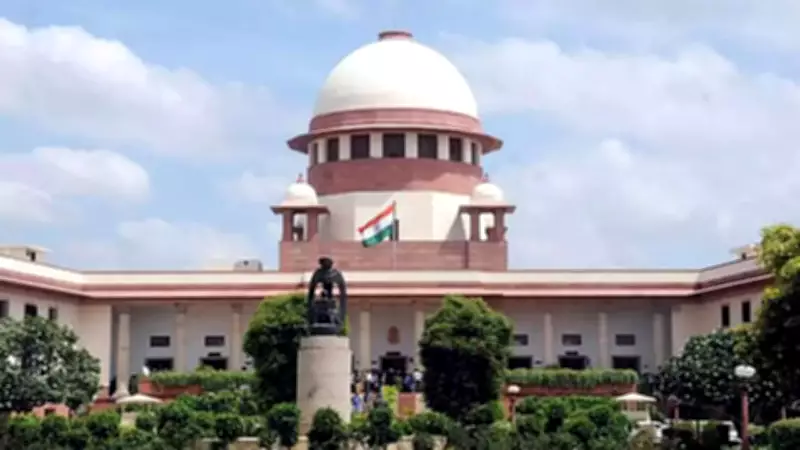
Supreme Court Sets Date for Long-Awaited Verdict Amid Growing Concerns Over Judicial Delays
The Supreme Court of India has scheduled Thursday for the pronouncement of a verdict that has been pending for over a year, highlighting a persistent issue within the judiciary. A two-judge bench, comprising Justices P S Narasimha and Manoj Misra, will deliver the judgment in the case B Prashanth Hegde vs State Bank of India and Another, which was reserved on December 3, 2024, after extensive hearings.
Mounting Criticism from the Apex Court
This development comes against a backdrop of increasing unease within the Supreme Court regarding the practice of judges delaying verdicts after reserving them. Recently, the court has openly criticized High Court judges for reserving judgments and then failing to pronounce decisions promptly, labeling this trend as a significant ailment in the justice delivery system.
In a notable instance on February 3, a bench led by Chief Justice Surya Kant specifically called out Jharkhand High Court judge Rongon Mukhopadhyay for keeping judgments reserved for years. The CJI described such delays as a challenge that must be cured to prevent further infection of the judicial process.

Details of the Pending Case
The case in question involves:
- A failure to repay alleged bank dues amounting to Rs 300 crore.
- A counter-claim challenging the proceedings under the Insolvency and Bankruptcy Code (IBC).
- Hearings where senior advocate A M Singhvi represented the appellant, and additional solicitor general N Venkataraman appeared for the respondents.
It is noteworthy that the movement in this case occurred shortly after the CJI's public criticism, though this may be coincidental. According to inquiries with the Supreme Court registry, Justice Misra agreed to author the judgment on behalf of the bench, and it has been pending with him for more than a year.
CJI's Response and Proposed Measures
When contacted for comments on concerns over prolonged judgment reservations, the office of Chief Justice Surya Kant stated that the CJI is aware of the issue and is contemplating consultations with colleagues to issue general internal guidelines for prompt judgment delivery. The office emphasized that while the overwhelming majority of Supreme Court judges do not keep judgments reserved for extended periods, they require more time than High Court judges to deliberate, as their decisions become the law of the land.
The CJI has previously advocated for dictating orders in the courtroom immediately after hearings as a best practice to avoid reserving decisions in too many cases. Sources indicate that due to administrative pressures, the bench led by the CJI often sits beyond scheduled hours to compensate litigants and complete judicial work.
Historical Context and Ongoing Challenges
This is not a new issue. In 2001, the Supreme Court flagged similar practices in the Anil Rai case, where High Court judges reserved verdicts but failed to pronounce them or issued only operative portions with promises of detailed reasons later—often broken commitments. The court ruled that if a judgment remained reserved for over six months, litigants could apply to the concerned Chief Justice for a fresh hearing before another bench.
However, while guidelines have been laid down for High Courts, similar delays in the Supreme Court have seen less action. For example, Justice A S Oka, nearing retirement last year, delivered a judgment on a long-pending dispute between two ISKCON factions after keeping it reserved for almost a year.
The upcoming verdict delivery underscores the ongoing struggle to balance judicial deliberation with timely justice, as the Supreme Court grapples with internal and external pressures to reform delay-prone practices.