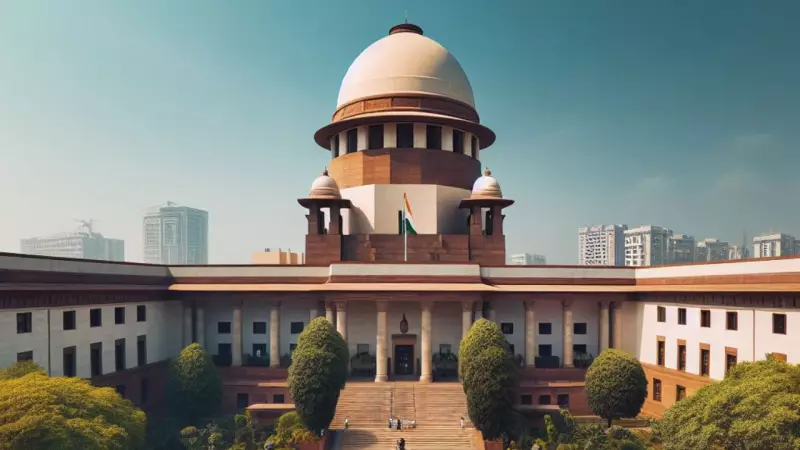
The Supreme Court of India has reached a critical juncture in the emotionally charged case concerning a plea for passive euthanasia for 31-year-old Harish Rana, who has been in a persistent vegetative state for the last 13 years. On Thursday, the apex court stated that the time has come to take a final decision but emphasized it first wishes to personally speak to his parents before proceeding further.
AIIMS Medical Report Paints a Grim Picture
The court's deliberation follows the submission of a secondary medical report from the All India Institute of Medical Sciences (AIIMS), Delhi. This report was commissioned by the Supreme Court itself and has corroborated the findings of an earlier primary medical board. Both reports concur that there is a negligible chance of Harish Rana's recovery from his current condition.
A bench comprising Justices J B Pardiwala and K V Viswanathan described the AIIMS report as "sad" and acknowledged the profound challenge of the case. "It's a very sad report, and it will be a big challenge for us also, but we can't keep the boy like this for all time to come," the bench remarked during the hearing.

Court Directs Lawyers to Engage with Family
In a significant step, the Supreme Court has directed its registry to provide copies of the medical report to Additional Solicitor General Aishwarya Bhati and advocate Rashmi Nandakumar, who is representing Harish's father. The bench explicitly requested both lawyers to thoroughly study the report to assist the court in its final decision.
Furthermore, the court has asked the two lawyers to meet and interact with Harish Rana's parents and siblings to discuss the grave issue before the next hearing. The bench has scheduled an in-chamber interaction with the parents for January 13.
The Legal Framework for Passive Euthanasia
This case is being processed under the strict procedure for passive euthanasia established by the Supreme Court in its landmark judgment. The protocol mandates that a decision to withdraw artificial life support can only be made after primary and secondary medical boards provide concurring opinions on the patient's irreversible condition.
In the event of contradictory medical reports, the matter is to be adjudicated by the court, which may then constitute an independent committee of senior medical experts.
The tragic incident that led to this prolonged legal battle occurred on August 20, 2013, when Harish Rana fell from the fourth floor. Despite treatment at multiple hospitals, his condition did not improve, leaving him in a vegetative state. His father initially approached the Delhi High Court, which declined to refer the case to a medical board. The Supreme Court later intervened, leading to the formation of the primary medical board by Noida District Hospital, whose report described Harish's condition as "pathetic."
As the nation watches, the Supreme Court prepares for a somber dialogue with the family, balancing legal procedure with deep human empathy in a case that touches the core of medical ethics and the right to a dignified death.