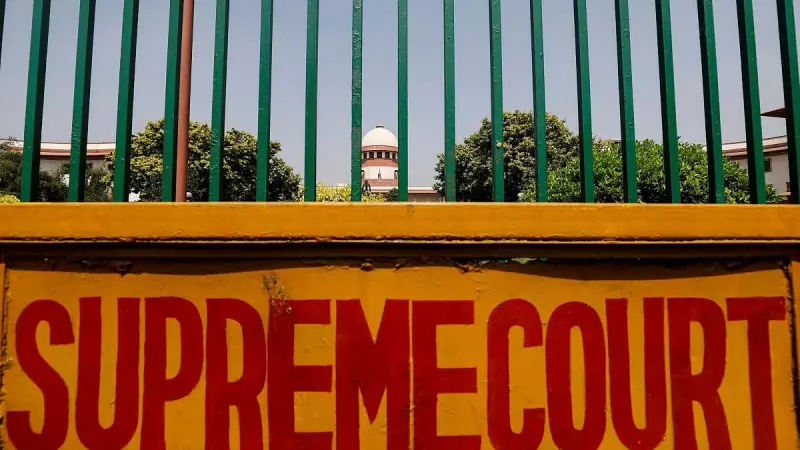
In a significant clarification on sentencing powers, the Supreme Court of India has ruled that a trial court does not possess the authority to impose a prison term that lasts until the "end of the convict's natural life." This landmark interpretation of criminal law came as the apex court partly allowed an appeal in a brutal murder case.
The Case That Led to the Ruling
The judgment was delivered on 23 December 2025, in an appeal filed by a man named Kiran. He had been convicted for the murder of a widow, whom he set ablaze after she rejected his sexual advances. While the court was hearing his appeal against the conviction and sentence, it took the opportunity to delineate the limits of a trial court's sentencing jurisdiction.
What the Supreme Court Said
The bench made a clear distinction between the powers of the trial court and those of constitutional courts like the High Court or Supreme Court. It emphasized that a sentence directing imprisonment for the remainder of a convict's natural life is a specific order that falls outside the statutory framework governing trial courts.
The trial court's sentencing options are bound by the provisions of the Indian Penal Code and the Code of Criminal Procedure, which do not explicitly grant this extreme power. Such a sentence, the court indicated, is a distinct category and its imposition requires a different level of judicial consideration.
Implications for Criminal Jurisprudence
This ruling brings much-needed clarity to India's criminal justice system. It reins in potential judicial overreach at the trial level and standardizes sentencing protocols. Legal experts believe the judgment will ensure that sentences of such extreme severity are only handed down after thorough scrutiny by higher judiciary benches, which are better equipped to examine all mitigating and aggravating circumstances in depth.
The decision underscores a fundamental legal principle: the punishment must not only fit the crime but also be awarded by a court competent to prescribe it. While the heinous nature of crimes like the one Kiran was convicted for demands stern punishment, the process must adhere strictly to the law's architecture.
The Supreme Court's intervention, therefore, serves as a crucial check on sentencing uniformity and legal propriety, even as it continues to hear the merits of Kiran's specific appeal against his murder conviction.