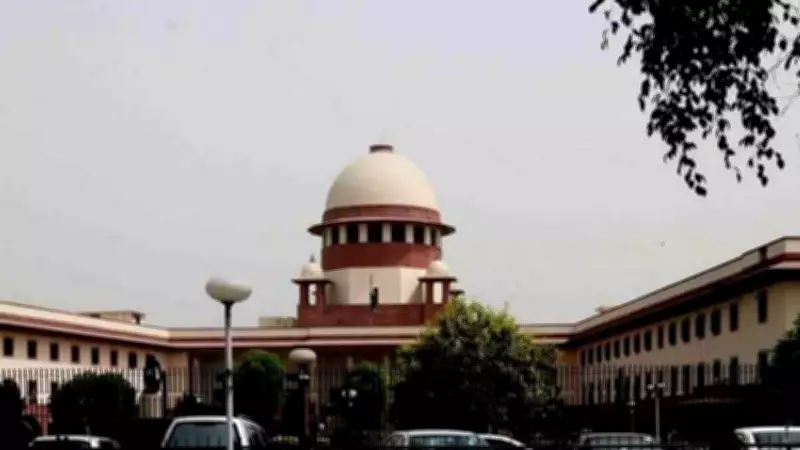
Supreme Court Upholds High Court Order Cancelling Hyderabad Mediation Centre Land Allotment
The Supreme Court of India has firmly upheld a Telangana High Court ruling that cancelled the state government's decision to allot 3.70 acres of prime land in Hyderabad to the International Arbitration and Mediation Centre (IAMC). This landmark decision reinforces legal standards for land alienation and public purpose definitions under state rules.
Judicial Bench Dismisses Special Leave Petitions
A bench comprising Justices Dipankar Datta and S V N Bhatti heard the appeal against the High Court's order dated June 27, 2025. On Wednesday, the bench declared, "We are not inclined to interfere with the impugned judgment(s) and order(s) of the High Court; hence the Special Leave Petitions are dismissed." This dismissal solidifies the High Court's findings of procedural irregularities in the land allotment process.
Background and Inauguration of the Centre
The IAMC was inaugurated in December 2021 with high-profile ceremonies attended by the then Chief Justice of India, N V Ramana, and the then Telangana Chief Minister, K Chandrashekar Rao. Initially headed by former Supreme Court judge Justice L Nageswara Rao, who resigned in 2024 citing personal reasons, the centre later came under the leadership of former SC Judge Justice B Sudershan Reddy. Despite its prestigious launch, the centre's legal standing has been under scrutiny.
High Court's Ruling on Public Interest Litigations
The High Court's judgment emerged from two Public Interest Litigations (PILs) that challenged three government orders:
- Allotment of land in Raidurg village to the IAMC.
- Provision of financial aid amounting to Rs 3 crore to the centre.
- Directive for all state government departments and public sector undertakings to refer disputes above Rs 3 crore to the IAMC for arbitration.
Senior Advocate A M Singhvi represented the state in the appeal, while Senior Advocates Gopal Sankaranarayanan and Vikram Pooserla appeared for the IAMC. The PILs argued that the land should not have been allotted to the IAMC, as it is not a statutory body but a private entity generating profits, thus violating state land rules.
Legal Violations Cited by the High Court
The High Court detailed multiple legal breaches in its order. Under Rule 3(a) of the Andhra Pradesh (Telangana Area) Alienation of State Lands and Land Revenue Rules, 1975, alienation of state land free of cost is permissible only in favour of a local body or authority for an unremunerative public purpose. For private institutions like the IAMC, the government must charge market value. The court emphasized that Rule 2(j) defines 'public purpose' restrictively, including only primary purposes such as construction of schools, temples, roads, and hospitals—not ancillary benefits.
Furthermore, the High Court noted that the land was allotted without assessing, charging, or collecting market value, and at the time of allotment, the IAMC was not registered as a company. The court criticized the government's conduct as "unduly hasty," pointing out that a possession certificate was issued even before formalizing allotment terms, which "often result in exercise of power contrary to the procedure."
Partial Upholding of Government Orders
While cancelling the land allotment, the High Court upheld the government orders providing financial aid and referring government disputes to the IAMC, stating they align with the broader policy to promote alternative dispute resolution. This partial validation highlights the centre's role in arbitration, albeit without improper land benefits.
This Supreme Court decision underscores the importance of adhering to legal frameworks in government allocations, ensuring transparency and accountability in public resource management.