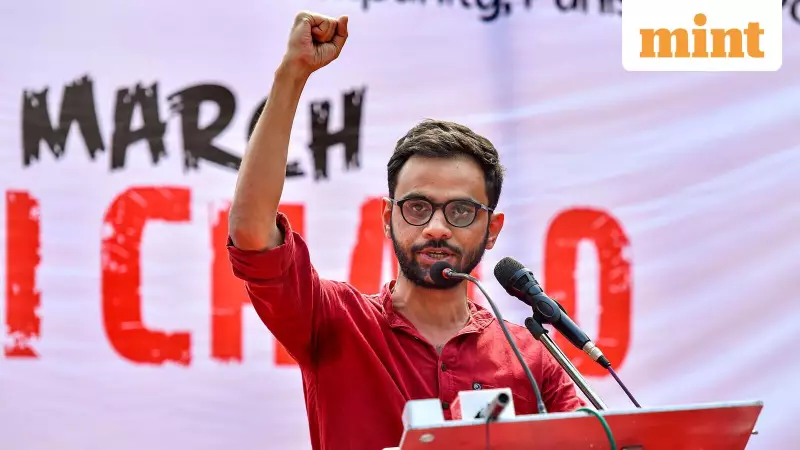
The Supreme Court of India is set to deliver a crucial judgment on Monday regarding the bail applications of student activists Sharjeel Imam, Umar Khalid, and several others. They are challenging a Delhi High Court order that denied them bail in a case registered under the stringent Unlawful Activities (Prevention) Act (UAPA). This case is connected to the alleged larger conspiracy behind the devastating north-east Delhi riots of February 2020.
The Bench and the Accused
A bench comprising Justices Aravind Kumar and NV Anjaria will pronounce the verdict. The court had reserved its judgment on December 10 after extensive hearings. The apex court's ruling will also cover the bail pleas of co-accused Gulfisha Fatima, Meeran Haider, Shifa Ur Rehman, Mohd Saleem Khan, and Shadab Ahmed. All accused have been in judicial custody for over five years while facing serious charges under the UAPA.
Key Arguments Presented in Court
During the hearings, the defence lawyers primarily argued on two fronts: the prolonged delay in the trial and the absence of evidence linking their clients directly to violence. They contended that despite the passage of more than five years, no concrete proof has emerged to show that the accused instigated the riots. The advocates emphasised the unlikelihood of the trial commencing soon, given the complexity of the case.

On the opposing side, the Delhi Police strongly objected to granting bail. The prosecution labelled the alleged offences as a "deliberate attempt to destabilise the state". They argued that the events were not spontaneous protests but part of a meticulously planned "pan-India" conspiracy with objectives of "regime change" and "economic strangulation."
The Prosecution's Narrative of Conspiracy
The Delhi Police submitted that the conspiracy was allegedly timed to coincide with the official visit of the then US President, Donald Trump, to India. The intention, as per the police, was to draw international media attention and globalise the issue surrounding the Citizenship Amendment Act (CAA). They claimed the CAA issue was used as a "radicalising catalyst" disguised under the banner of peaceful protest.
The prosecution held this "deep-rooted, premeditated and pre-planned conspiracy" responsible for the death of 53 persons, large-scale damage to public property, and the registration of 753 First Information Reports (FIRs) in Delhi alone. They cited evidence from various WhatsApp groups, including the Delhi Protest Support Group (DPSG) and Jamia Awareness Campaign Team, to suggest the conspiracy had a wider reach. The police also argued that delays in the trial were attributable to the petitioners themselves and assured that with cooperation, the trial could conclude within two years.
Background and Previous Court Orders
The Delhi High Court, on September 2, had denied bail to Imam, Khalid, and seven others. In its order, the High Court observed that, prima facie, the roles of Imam and Khalid were "grave." It noted they had delivered inflammatory speeches on communal lines to "instigate mass mobilisation of members of the Muslim community." The bail plea of another accused, Tasleem Ahmed, was rejected by a different High Court bench on the same day.
In 2020, the Delhi police arrested Sharjeel Imam under UAPA, naming him as a main conspirator in the riots case. The violence had erupted during protests against the then-proposed Citizenship Amendment Act (CAA) and the National Register of Citizens (NRC), resulting in 53 fatalities and over 700 injuries.
The Supreme Court's verdict on Monday is highly anticipated, as it will decide the immediate fate of the accused who have been incarcerated for an extended period under one of India's most stringent anti-terror laws.