

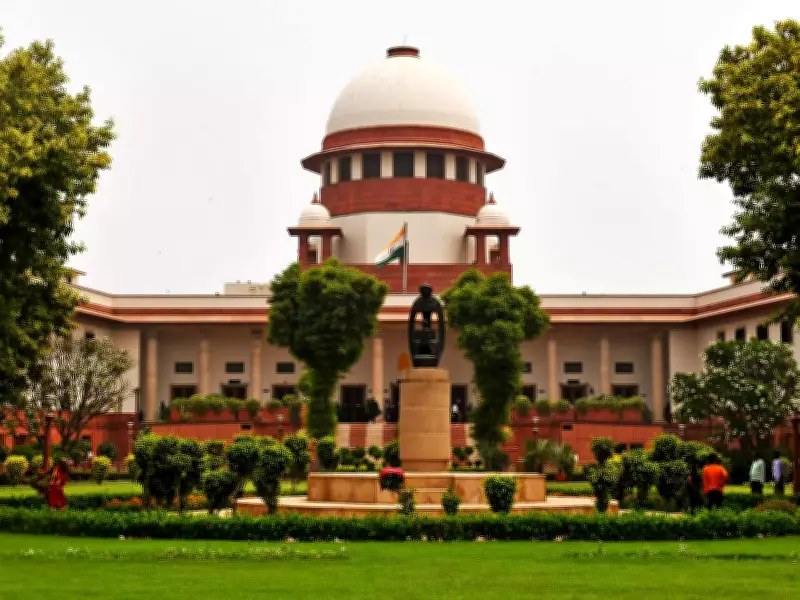
The Supreme Court on Wednesday observed that if an individual's fundamental right to freedom of religion is held to be superior to the identical right of a group or denomination, it could lead to dangerous consequences. The court stated that it would not be part of a process that results in the annihilation of a religion.
Background of the Case
Bindu Ammini, a lawyer and social activist, was manhandled for attempting to enter the Sabarimala temple after the 2018 Supreme Court judgment lifted the ban on the entry of women in the 10-50 age group. She asserted her fundamental right to enter a temple. Senior advocate Indira Jaising, appearing for Bindu and another woman, Kanakadurga, argued that there is no theological bar on women entering any public temple.
Arguments Before the Bench
Appearing before a bench comprising Chief Justice Surya Kant and Justices B V Nagarathna, M M Sundresh, A Amanullah, Aravind Kumar, A G Masih, P B Varale, R Mahadevan, and J Bagchi, Indira Jaising submitted that Bindu does not dispute the 'naistik brahmachari' attributes of Ayyappa at Sabarimala. However, she contended that the custom cannot be a ground for violating her fundamental right to enter the temple.

Jaising emphasized that the Indian Constitution is unique globally because it gives prominence to individuals' fundamental rights. She questioned, "If a woman wants to go into a temple, what legal injury is she causing to anyone?" She added that if the court rules otherwise, the world will witness how the Supreme Court of India develops jurisprudence relating to women's rights.
Court's Response
Justice Sundresh disagreed with Jaising's line of argument. He asked whether an individual's right to freedom of religion under Article 25(1) clashes with the right of a group of devotees or followers of a denomination, and which right should prevail. He stated, "How do we enforce individual rights when it violates fundamental rights of others? Article 25(1) right of one cannot be pitted against another. If we agree with your submissions, it will lead to dangerous consequences. If each devotee goes to a common deity and exercises his freedom to worship in a different manner, the consequences will be disastrous for the religion or denomination itself."
Justice Nagarathna concurred, saying, "It will lead to annihilation of religion, and we do not want to be a part of it. Matters of religion are not a subject on which either the court or the legislature can sit in judgment. It cannot be a matter of debate because it is a matter of conscience."
Justice Amanullah questioned whether a practice or custom that has crystallized over centuries should be removed by a court to allow a person to enter a temple, knowing it would hurt the religious feelings of the majority of followers of the denomination. Arguments will continue on Thursday.






