

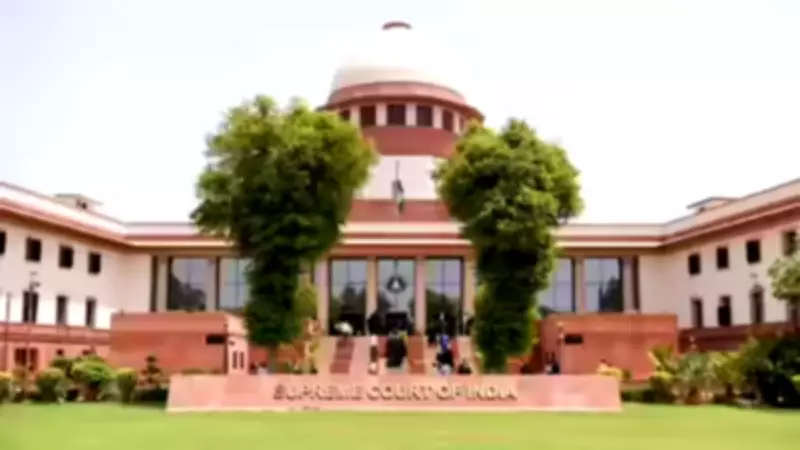
Supreme Court Raises Concerns Over Mandatory Menstrual Leave for Female Workers
The Supreme Court of India has voiced significant apprehension regarding petitions seeking mandatory paid menstrual leave for women employees, warning that such a policy could inadvertently create psychological barriers and negatively impact women's career prospects in the job market.
Court Highlights Potential Negative Consequences
A bench comprising Chief Justice Surya Kant and Justices Joymalya Bagchi and Vipul M Pancholi emphasized the long-term implications of implementing compulsory menstrual leave. "Please understand the long-term impact of such a move," the bench stated, adding that while affirmative action for women is constitutionally recognized, mandatory leave could make female workers appear less attractive to employers.
The court articulated concerns that employers might become reluctant to hire women if they are required to grant leave every month. "Will an employer be happy if an employee takes leave every month? You want to create such a situation where employers will be reluctant to give women jobs," the bench remarked during the hearing.

Voluntary Implementation vs. Compulsory Mandates
The Supreme Court acknowledged that some states and private companies have already implemented menstrual leave policies voluntarily. For instance, Bihar has had such provisions since 1992, and Karnataka has introduced them in schools. However, the bench stressed a crucial distinction between voluntary adoption and compulsory enforcement.
CJI Surya Kant noted, "If they do it voluntarily, it is welcome. But the moment it is made compulsory, you do not know how much damage you will cause to their careers. Nobody will give them responsibilities. On the judicial side, day-to-day trials cannot be assigned to them."
Government's Role and Previous Petitions
The court clarified that framing a model policy on this issue falls within the government's domain, not the judiciary's. This stance follows a previous directive from February 24, 2023, when the Supreme Court asked the government to examine the need for such a policy and its potential fallout on female workforce engagement.
Senior advocate M R Shamshad, representing petitioner S M Tripathi, highlighted that nearly three years have passed without action from the government. Tripathi's petitions on this matter were disposed of twice—in February 2023 and July 2024—prompting the bench to warn of adverse orders if he approaches the court for a third time.
International Context of Menstrual Leave Policies
Globally, several countries have implemented menstrual leave policies with varying approaches:
- Spain became the first European Union country to introduce paid menstrual leave of 3-5 days in February 2023, with salaries covered by the government.
- Japan enacted a law addressing menstrual leave as early as 1947.
- South Korea followed suit in 1953 with similar provisions.
- The former Soviet Union also had policies to compensate female workers absent due to menstrual pain.
The Supreme Court's remarks underscore the complex balance between supporting women's health and ensuring equitable employment opportunities, leaving the ultimate decision to governmental policy-making bodies.






