

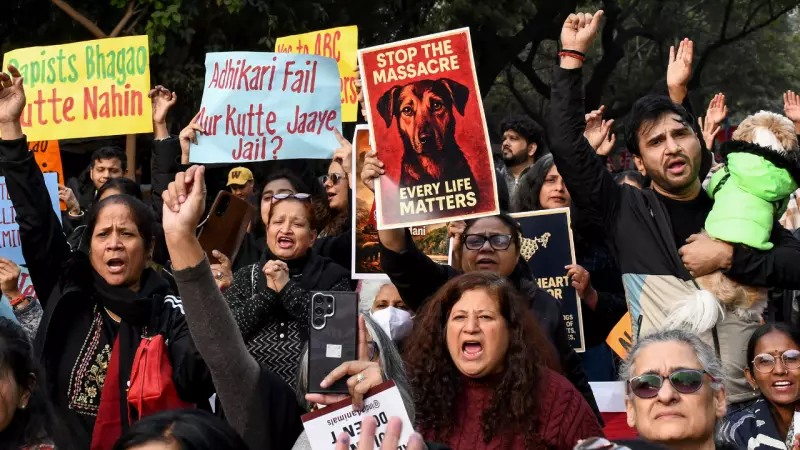
The Supreme Court of India continued its hearing on the stray dogs case this Tuesday. The court issued a stern warning to state governments across the country. It indicated that states could face heavy financial penalties for failing to act on the issue.
Compensation for Victims and Accountability for Feeders
Justice Vikram Nath, part of a special three-judge bench, made the court's position clear. He stated that for every dog bite resulting in death or injury to a child or an elderly person, the state would likely be forced to pay compensation. This penalty would be for "not doing anything" to address the public safety hazard.
The bench, which also included Justices Sandeep Mehta and N.V. Anjaria, turned its attention to individuals who feed stray dogs. The court demanded clear accountability from these self-proclaimed dog feeders. It advised them to continue their feeding activities, but from within their own homes. The justices questioned why dogs should be allowed to litter public spaces, bite people, and cause fear.

Court Rejects Certain Petitions, Focuses on Core Issues
The hearing addressed a batch of various petitions. Some were filed by dog lovers seeking changes to previous court orders. Others demanded stricter enforcement of existing rules. The court clarified its stance on several points.
It refused to examine allegations of harassment against women dog feeders and caregivers. The bench reiterated that such complaints are law and order matters. Affected individuals should file FIRs with the police. The court also declined to consider claims about derogatory remarks made during public debates on the issue.
The judges observed that some arguments presented to them were "far from reality." They pointed to numerous video recordings showing stray dogs violently attacking children and senior citizens. These incidents underscore the urgency of the problem.
Clarification on Past Orders and Widespread Non-Compliance
The Supreme Court bench took time to clarify its earlier directives. It emphasized that it never ordered the complete removal of all stray dogs from streets. Its instructions were specifically limited to managing stray canines under the Animal Birth Control (ABC) Rules.
The court highlighted a serious problem of non-compliance by municipal bodies and civic authorities. This failure to follow rules has had tragic consequences. People are dying not only from dog bites but also in road accidents caused by stray animals wandering onto highways.
Recent Directives and the Origin of the Case
On November 7, the Supreme Court noted an "alarming rise" in dog bite incidents. These attacks were occurring in sensitive institutional areas like schools, hospitals, and railway stations. In response, the court issued specific orders.
It directed that stray dogs must be relocated to designated shelters. This relocation should only happen after the animals undergo proper sterilization and vaccination. The court explicitly ordered that dogs picked up from public areas should not be released back to the same locations.
Authorities received further instructions to remove cattle and other stray animals from state highways, national highways, and expressways. This aims to prevent deadly road accidents.
The Supreme Court is hearing this matter as a suo motu case. It initiated the proceedings on July 28 of last year. The move came after numerous media reports detailed stray dog attacks in the national capital. These attacks often led to rabies infections, particularly among young children, prompting judicial intervention.






