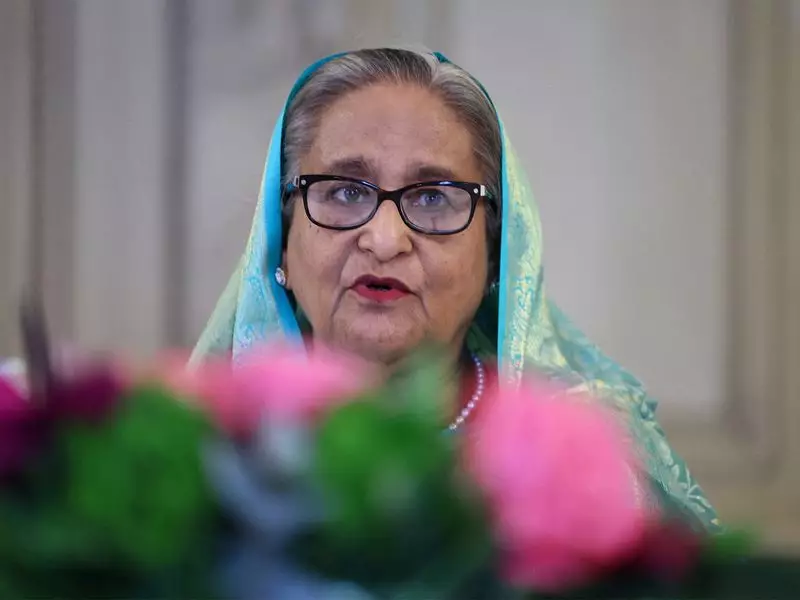
Former Bangladeshi Prime Minister and current opposition leader Sheikh Hasina has made a defiant statement, declaring she will not return to her homeland to face what she terms a "political assassination" attempt through the judicial system. Her comments come in the wake of a recent verdict by the International Crimes Tribunal (ICT) in Dhaka.
The Verdict and Hasina's Forceful Rejection
The International Crimes Tribunal-1, a domestic court in Bangladesh established to prosecute war crimes from the 1971 Liberation War, delivered its judgment. While the specific details of the verdict against which Hasina is reacting were part of the original report, her response has been unequivocal and sharp. The leader of the Awami League has framed the legal proceedings not as a pursuit of justice, but as a politically motivated weapon aimed at eliminating her from the political landscape of Bangladesh.
In a strongly worded reaction, Hasina asserted, "I cannot be demanded to return to the country to face my own political assassination." This statement underscores her perception of grave personal risk and a lack of faith in the judicial process under the current administration. Her position highlights the deep and ongoing political rift in Bangladesh, where legal actions against opposition figures are frequently viewed through a partisan lens.

A History of Legal Confrontations
This incident is not an isolated one in Sheikh Hasina's long political career. She has faced multiple legal challenges over the years, which she and her party consistently describe as tools of harassment wielded by political rivals. The use of the International Crimes Tribunal has been particularly controversial, with critics, including international human rights observers, raising concerns about its procedures and fairness when dealing with political cases.
The latest verdict and Hasina's reaction fit into this established pattern of confrontation. By refusing to comply and labeling the move an "assassination," she is rallying her support base and framing the narrative for both domestic and international audiences. This strategy aims to delegitimize the court's action and maintain her position as a central figure in Bangladeshi politics, even from outside the country.
Implications for Bangladesh's Political Future
The standoff has significant ramifications for the political stability and democratic process in Bangladesh. Sheikh Hasina remains a towering figure with a massive following. Her absence and the perception of judicial persecution could further polarize the electorate and lead to increased political unrest. The situation tests the resilience of Bangladesh's institutions and their ability to function independently of political influence.
Furthermore, this development is closely watched by India and other regional neighbors. Bangladesh's internal stability is crucial for regional security and economic cooperation. A protracted political crisis, fueled by such high-stakes legal battles, could have spillover effects. The Indian government, in particular, monitors the situation given its historical ties with the Awami League and the importance of a stable eastern border.
In conclusion, Sheikh Hasina's defiant stance against the ICT verdict marks a new escalation in Bangladesh's intense political warfare. By framing the legal process as a threat to her life and political existence, she has drawn a firm line, setting the stage for continued conflict and uncertainty in the nation's governance. The coming weeks will reveal how this judicial-political drama unfolds and what it means for the future of democracy in Bangladesh.