

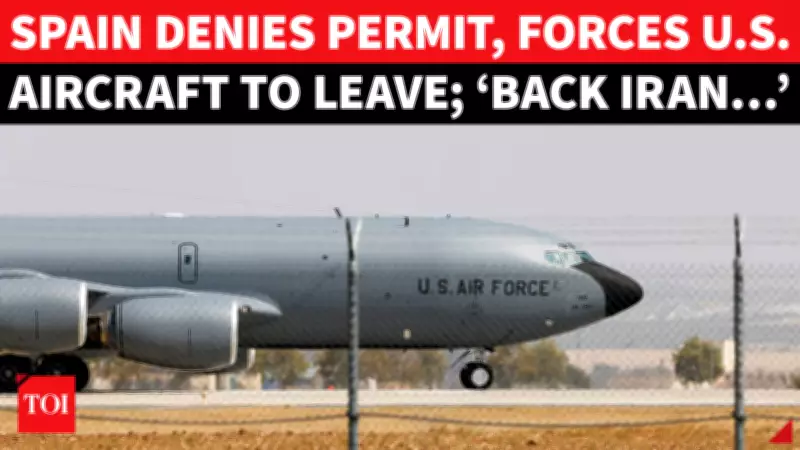
Spain Formally Refuses US Access to Bases for Iran Military Campaign
In a significant diplomatic move, Spain has officially denied the United States permission to utilize its jointly operated military bases for ongoing strikes against Iran. This decision comes as part of the broader US and Israeli campaign, with fifteen aircraft already observed departing from the Rota and Moron bases in southern Spain, according to detailed flight tracking data from FlightRadar24.
Spanish Government's Firm Stance on Sovereignty and International Law
Spanish Foreign Minister Jose Manuel Albares emphasized that the bases, while jointly operated, remain under Spanish sovereignty. He stated unequivocally that they would not be employed for any purposes outside the bilateral agreement with Washington or in contradiction of the United Nations Charter. Defence Minister Margarita Robles provided further clarification, confirming that the departing jets were primarily Boeing KC-135 Stratotanker aerial refuelling aircraft. Specifically, nine tankers left from Moron airbase, heading to Ramstein Air Base in Germany, with additional flights departing from Rota.
Prime Minister Pedro Sanchez delivered one of the sharpest condemnations among Western leaders regarding the strikes. He articulated a nuanced position, asserting that one can oppose the Iranian regime while simultaneously rejecting a military intervention deemed unjustified, dangerous, and outside the bounds of international law. Sanchez called upon the European Union to join Spain in advocating for immediate de-escalation and dialogue to resolve the conflict peacefully.

Deepening European Divisions Over the Conflict
The refusal by Spain has exposed and exacerbated a growing fracture among European allies concerning the conflict. Initially, the United Kingdom also refused to allow the use of its bases; however, Prime Minister Keir Starmer reversed this decision, authorizing their use for collective self-defence while clarifying that Britain would not directly participate in the strikes. In contrast, Germany has maintained a stance of non-participation, refusing to be involved in the military actions.
These divisions highlight a deepening transatlantic fault line, with allies sharply split over the legality, timing, and potential consequences of Operation Epic Fury. The differing positions underscore broader geopolitical tensions and raise questions about the unity and strategic alignment within NATO and the European Union in response to escalating conflicts in the Middle East.
The situation remains fluid, with ongoing diplomatic efforts and military movements likely to influence future developments. As European nations grapple with their roles and responsibilities, the rift over the Iran strikes serves as a critical test of international alliances and the commitment to multilateral frameworks in addressing global security challenges.






