

The Night That Haunts Manoharpur Village
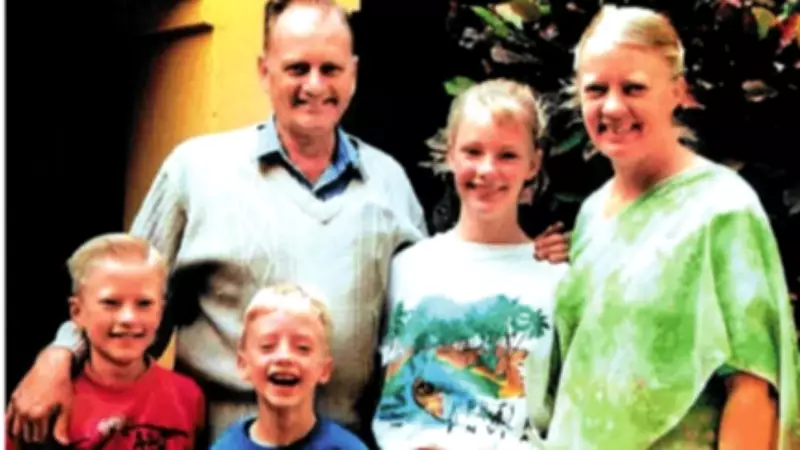
Nayam Marndi, now in her seventies, may have lost count of her exact age, but the memory of January 22-23, 1999, remains etched in her mind with painful clarity. Sitting on a neighbor's verandah in Kacha Sahi of Manoharpur village, she points toward the spot next to a church where Australian missionary Graham Staines and his two young sons, Philip (10) and Timothy (6), were brutally burnt alive.
"It happened exactly there," she says, her wrinkled face tightening and eyes moistening as she recalls the horrific night. "All of us — my husband Benjamin, our two sons and daughter — were locked inside as the mob grew in size. From the room, we heard the shouting of the crowd and the cries of the helpless victims."
Case Returns to Headlines After 27 Years
Twenty-seven years after the brutal killings, the case has resurfaced in national discourse. The Odisha government recently presented its 2022 remission policy before the Supreme Court, which allows remission for convicts whose death sentences have been commuted to life imprisonment after serving 25 years in jail. Dara Singh, convicted for the murders, has already spent over 26 years in prison.

Odisha Advocate General Pitambar Acharya informed the apex court that the State Sentence Review Board is actively examining Singh's remission plea. The board has sought detailed reports from Odisha prison authorities and the administration of Singh's native Auraiya district in Uttar Pradesh.
Village Anxiety Over Possible Release
The prospect of Dara Singh's release has stirred anxiety among Manoharpur residents. A Christian woman in her thirties from Kacha Sahi expressed unease: "Mahendra Hembram had come here some time ago, and our people told us to be careful. We did feel intimidated. I don't know what it will mean for us if Dara Singh returns. The situation, after all, has remained peaceful all these years."
Hembram, another convict in the burning case, returned directly to the village after serving 25 years in prison. His release has heightened concerns about what might follow if Singh is also freed.
Recounting the Winter Night of Horror
Back in January 1999, Graham Staines had converted the rear of his station wagon into a makeshift bed, covering the vehicle with straw to ward off the winter chill. Close to midnight on January 22-23, a mob descended on the spot, raising loud cries as they advanced. Armed with axes and other weapons, the attackers smashed the vehicle before dousing it with petrol and setting it ablaze.
The inferno consumed the missionary and his two young sons, who were asleep after attending an annual "jungle camp" social and spiritual gathering. The mob was reportedly enraged by what they believed were missionary conversions and the "ruining of tribal culture."
By morning, when Marndi's door was unlatched, the burnt vehicle and bodies inside had transformed the quiet village into the site of one of Odisha's most horrific crimes. "Life has been quiet since then. Our children have grown up. But the memory is still fresh," says Marndi, who speaks only Santali but understands Odia. "Our village had never seen a night like that before, and it has never seen anything like it since."
How the Village Remembers Today
For younger residents, the horror survives in stories that still surface in village conversations. "We have heard the account from our elders. People still talk about it," says Malati Marndi, who came to Manoharpur after her marriage five years ago.
Nimai Murmu, a 67-year-old farmer, reflects: "There were tensions and disagreements, but no one imagined it would turn into something so horrific. We live together peacefully now, but the scar of that night will stay with us forever."
The village itself has undergone visible changes. A new, larger church now stands a stone's throw from the old one, which remains intact but locked. The road leading in is well-paved, and clay-tiled roofs have started making way for concrete structures. While prosperity is visible in parts, many villagers still rely on rearing goats, collecting mahua flowers, and seasonal agriculture for their livelihood.

National Shock and Legal Proceedings
The murders sent shockwaves across the nation. Then Prime Minister Atal Bihari Vajpayee condemned the killings, while President K.R. Narayanan described the crime as "belonging to the world's inventory of black deeds" and "a monumental aberration" that had tarnished India's tradition of tolerance.
The attackers had accused Staines of carrying out forced conversions—allegations his family has consistently denied. The Central Bureau of Investigation chargesheeted 18 people on June 22, 1999. Three years later, on September 15, 2003, a trial court convicted Dara Singh, identified as a Bajrang Dal member, and 12 others. Singh received a death sentence while the rest were given life imprisonment.
The Orissa High Court, on May 19, 2005, commuted Singh's death sentence to life and upheld Hembram's life term while acquitting the remaining convicts. The Supreme Court later affirmed the life sentences of both Singh and Hembram.
Recent Developments and Remission
Hembram, now 47, walked free in April last year after Odisha remitted his life sentence. On March 18, the Supreme Court indicated it expected the state government to decide on Singh's case before May 13. "The sentence review board will take an appropriate decision soon," Advocate General Acharya stated.
Hembram maintains that what happened that night was "more of an accident than intentional." He adds: "I was an undergraduate student in Baripada and was arrested 11 months after the incident... When the assassins of former PM Rajiv Gandhi were released after completing their sentences, I felt hopeful that someday I, too, would step out." Hembram now plans to marry a college teacher and start afresh.
The Staines Legacy and Unfinished Healing
Born in 1941 in Palmwoods, Queensland, Graham Staines first came to India at age 24. Working with the Evangelical Missionary Society of Mayurbhanj, he immersed himself in local life, becoming fluent in both Odia and Santali. The Mayurbhanj Leprosy Home became the center of his mission, where he not only treated patients but taught skills and crafts to help those ostracized by society build sustainable livelihoods.
Staines's widow Gladys (75), a nurse, remained in India for many years after the tragedy, continuing her husband's work. She founded the Graham Staines Memorial Hospital in Baripada in 2004 before eventually returning to Australia, receiving the Padma Shri in 2005 for her humanitarian efforts.
Today, the Staines family's legacy endures through the leprosy home in Baripada, which currently houses 51 inmates, and the hospital founded by Gladys. However, both institutions face challenges, operating with minimal staff and relying on donations from good Samaritans.
Commission Findings and Social Context
The Justice D.P. Wadhwa Commission, established by the central government to investigate the killings, concluded that the crime was personally driven by Dara Singh. The commission found no evidence linking the attack to any organization but determined that Singh had cultivated a following as a local strongman who exploited religious sentiments.
According to the commission, Singh's attention later shifted to Christian missionaries, and within this charged atmosphere, he mobilized supporters and led the mob attack on the Staines family. Though associated with missionary activity, the commission noted that Staines was not directly involved in conversions.
The commission highlighted that tensions between converted and non-converted tribals, combined with prolonged administrative indifference, had created a fragile social fabric. It was within this fraught landscape that one of India's most shocking hate crimes unfolded—leaving scars the region continues to grapple with nearly three decades later.





