

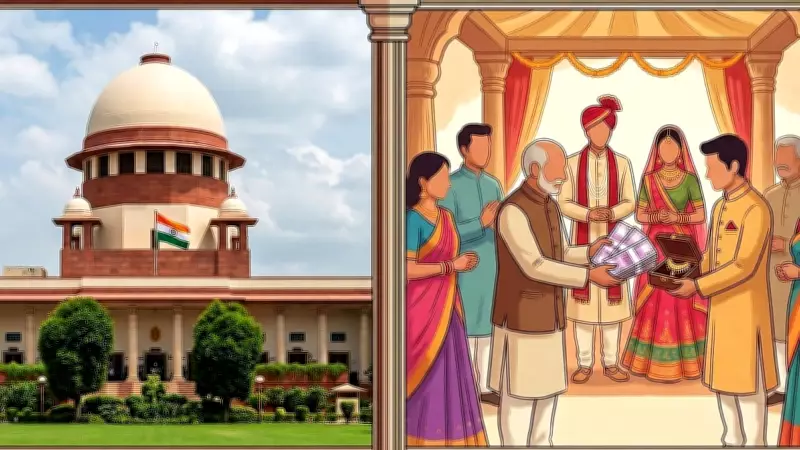
The Supreme Court on Wednesday made strong observations while dismissing an appeal filed by the younger brother of a man convicted in a dowry death case. A bench of Justices B V Nagarathna and Ujjal Bhuyan questioned the practice of men marrying women only to later insult them and their families.
Court's Strong Remarks
“Why do boys marry girls then insult them and their family?” the bench asked, expressing dismay over the persistent social evil of dowry harassment. The court emphasized that marriage is a sacred bond, not a transaction to extract money or goods from the bride’s family.
Appeal Dismissed
The appellant, the husband’s younger brother, had challenged his conviction in the dowry death case. The Supreme Court, however, found no merit in his plea and dismissed it, upholding the lower court’s decision. The bench noted that the evidence clearly pointed to harassment and cruelty meted out to the victim.

Dowry Deaths: A Continuing Menace
The court’s remarks come amid rising concerns over dowry-related crimes in India. Despite stringent laws like the Dowry Prohibition Act, 1961, and Section 304B of the Indian Penal Code, cases of dowry deaths continue to be reported. The Supreme Court has often urged stricter implementation of laws to protect women.
Legal Implications
The judgment serves as a reminder that all family members involved in dowry harassment can be held accountable. The court reiterated that the burden of proof lies on the accused to explain the unnatural death of a married woman within seven years of marriage.
This case highlights the judiciary’s zero-tolerance approach towards dowry-related offenses. The bench urged society to introspect and eliminate such regressive practices.






