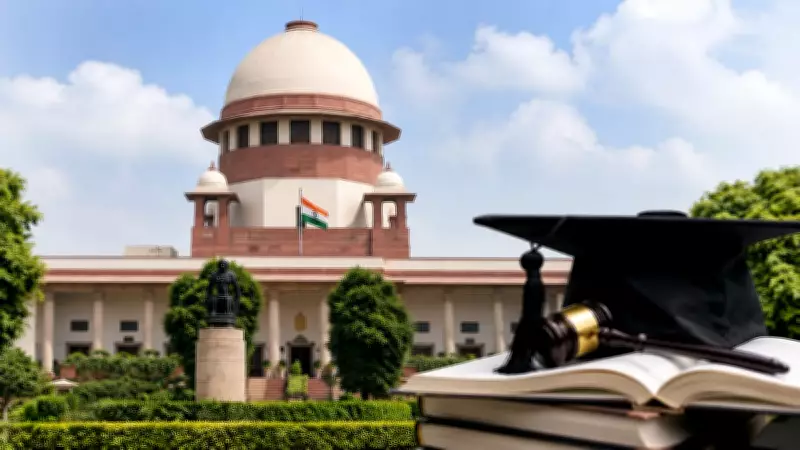
The Supreme Court on Tuesday stayed a Delhi High Court order that allowed law students with low attendance to appear for their examinations. The ruling came in the backdrop of the 2017 suicide of law student Sushant Rohilla at Amity University, where allegations of harassment over low attendance were raised.
Background of the Case
The Delhi High Court had earlier directed universities to permit students who failed to meet the minimum attendance requirement to take exams, citing the need for flexibility. However, the Supreme Court intervened, emphasizing the importance of attendance norms in maintaining academic discipline.
Supreme Court's Observations
A bench of Justices highlighted that attendance requirements are essential for ensuring students receive adequate instruction. The court noted that relaxing these norms could undermine the quality of legal education.

The case gained significance after the tragic death of Sushant Rohilla, who allegedly faced harassment for low attendance. The Supreme Court remarked that while compassion is necessary, academic standards must not be compromised.
Implications for Students
Law students across Delhi who were hoping to benefit from the High Court order now face uncertainty. The Supreme Court's stay means that existing attendance rules will remain in force until a final decision is reached.
The matter is scheduled for further hearing in two weeks. Legal experts suggest that the apex court may lay down broader guidelines on attendance policies for professional courses.