

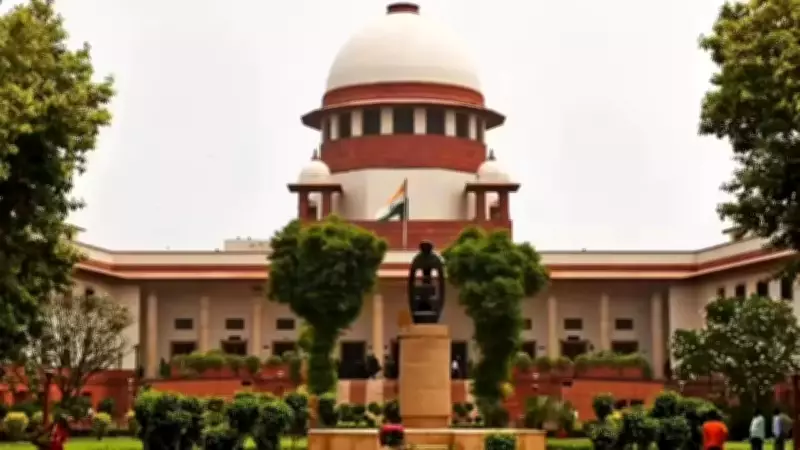
The Supreme Court of India has delivered a landmark judgment in the case of Prajwala v. Union of India, fundamentally reshaping the legal landscape surrounding sex work, human trafficking, and personal liberty. The ruling, delivered on 29 May 2026 by a Bench comprising Justice J.B. Pardiwala and Justice R. Mahadevan, addresses a critical constitutional question: can the State, under the guise of protection, deprive an adult of liberty who has made a conscious choice?
Clarifying the Legal Status of Sex Work
For decades, public perception and police practice have been at odds with legal reality. Contrary to popular belief, Indian law does not criminalize an adult engaging in sex work independently and voluntarily. The Immoral Traffic (Prevention) Act, 1956 (ITPA) targets exploitation, not consensual adult conduct. It criminalizes running brothels, procuring persons for prostitution, living on the earnings of another's sex work, public solicitation, and human trafficking. However, in practice, raids often treated all individuals as victims or criminals, ignoring this crucial distinction.
The Problem of Paternalism
Women found during raids were frequently confined to protective homes under Section 17 of the ITPA, intended as places of care but often functioning as involuntary detention. The underlying assumption was that a woman in sex work could not be exercising meaningful choice. The Supreme Court has now challenged this assumption, drawing a sharp constitutional line between trafficking and voluntary sex work.

Key Principles of the Judgment
The Court relied on international standards, particularly the Palermo Protocol, to define trafficking as involving an act, coercive means, and exploitative purpose. Where force, fraud, or coercion exists, consent is irrelevant. However, where an adult engages in sex work voluntarily, the anti-trafficking framework cannot override personal autonomy. The judgment emphasizes that constitutional rights under Article 21—dignity, privacy, autonomy—do not depend on social approval.
The Threshold Inquiry
One of the most significant safeguards introduced is the mandatory 'Threshold Inquiry.' Whenever an adult is produced before a magistrate after a rescue operation, the magistrate must directly ask: Are you here voluntarily? Do you wish to leave? Do you wish to stay in a protective institution? If the individual states she is working voluntarily and wishes to leave, the State cannot impose institutional custody. Magistrates can no longer mechanically sign detention orders; they must engage with questions of autonomy and liberty.
Nuanced Understanding of Vulnerability
The Court rejects simplistic binaries of victim or autonomous actor. Justice Pardiwala observed that vulnerability and agency can coexist. Poverty, social exclusion, and economic hardship may influence choices, but they do not extinguish agency. A person may make a difficult choice without surrendering the right to choose. This reflects a mature constitutional understanding of human dignity.
Rehabilitation as a Right, Not a Punishment
Traditionally, rehabilitation was imposed on individuals in the sex trade. The Court now holds that rehabilitation is a constitutional entitlement under Article 21, including mental health support, vocational opportunities, and healthcare. However, because it is a right, it cannot be forced. The State must create pathways out of exploitation but cannot impose assistance against an adult's will.
Practical Implications
The era of indiscriminate mass raids may end. Anti-trafficking efforts must become intelligence-driven, confidential, and focused on identifying coercion. Law enforcement must distinguish between trafficking networks and consensual adult activity. Resources should be redirected towards dismantling organized trafficking syndicates rather than detaining independent workers.
Constitutional Limits on State Power
The State has a legitimate interest in combating trafficking and protecting vulnerable individuals. However, this obligation cannot justify unrestricted interference in personal liberty. The Constitution does not permit forced virtue. A democratic state may punish exploitation and prohibit coercion, but it cannot substitute its moral preferences for the autonomous decisions of competent adults.

A Broader Constitutional Vision
Ultimately, the Prajwala judgment is about the relationship between citizen and State. It reaffirms that the true test of a constitutional democracy is how it treats choices it disapproves of. By choosing dignity over detention, autonomy over paternalism, and rights over moral policing, the Supreme Court has taken a significant step towards a more humane and constitutionally faithful vision of justice.
About the Author: Vivek Narayan Sharma is an Advocate-on-Record at the Supreme Court of India with 26 years of experience in litigation, arbitration, and mediation. He is a constitutional law expert known for resolving complex disputes and dedicating time to pro bono legal service.





