

Surat Counterfeit Rs 500 Note Gang: International Sourcing and Local Testing Uncovered
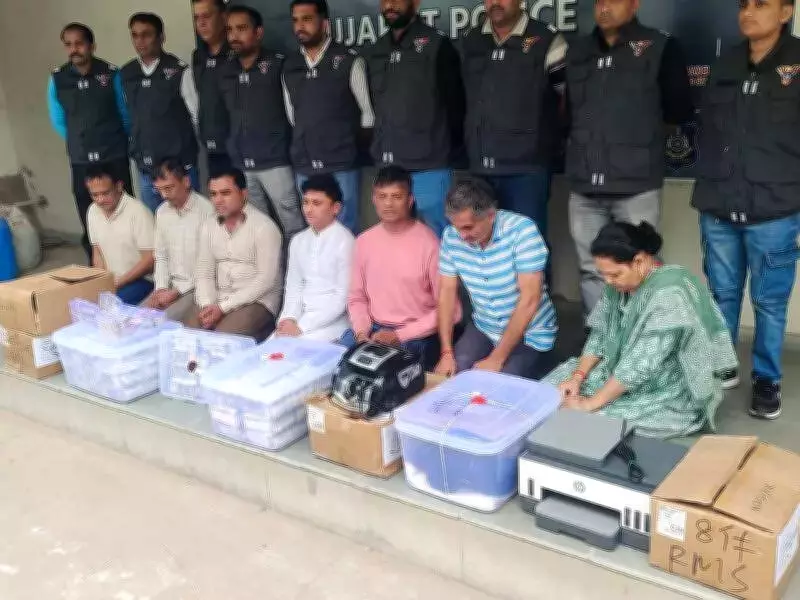
Investigators in Ahmedabad have exposed a meticulously planned operation by a seven-member gang to manufacture and circulate counterfeit Rs 500 notes, revealing an organized criminal network with international sourcing and systematic local testing before large-scale distribution. The crime branch has detailed how the gang executed their scheme with precision, from procuring materials abroad to testing the fake currency in local markets.
International Procurement from China
A senior crime branch officer disclosed that the accused sourced specialized paper embedded with imitation security threads marked "RBI" and "Bharat" from a supplier based in Qingdao city, China. "They actively searched for vendors on online platforms, established direct contact, and placed orders for paper that already featured security-like characteristics," the officer explained. To evade detection by authorities, the consignments were cleverly disguised as decorative items and stationery materials during shipment.
Surat-Based Manufacturing Setup
These parcels were delivered to various GIDC estates in Surat, allowing the gang to avoid scrutiny from law enforcement agencies. Once the raw materials were secured, the group established a covert printing unit at residential premises in Surat. They invested in high-precision printers and cutting machines to accurately replicate the size and finish of genuine currency notes. Some members even acquired graphic design skills to closely mimic the design, color patterns, and layout of the Rs 500 notes introduced after demonetization.

Testing Phase in Local Markets
Police revealed that the accused conducted small-scale trials to assess the quality of their counterfeit notes. "They initially used the notes at restaurants and later at clothing stores in Surat. When the notes were accepted without raising suspicion, their confidence grew significantly," the officer stated. This testing phase was crucial for refining their product and ensuring it could pass casual inspection.
Planned Large-Scale Circulation
Following successful testing, the gang devised a strategy for wider circulation through informal channels such as angadia networks and land transactions. Their objective was to inject substantial volumes of counterfeit currency into the market before being intercepted by the crime branch. This planned distribution network highlights the sophistication of their operation and the potential economic impact if left unchecked.
Political Connections Under Scrutiny
In a related development, investigators are examining the political links of Pradip Guruji, founder of the Shri Satyam Yog Foundation established in 2008 at Dhora Pardi village in Kamrej. Sources indicate that Guruji has maintained close ties with several political leaders, many of whom have visited his ashram over the years. Police are also investigating claims that Guruji had connections with a retired senior officer and allegedly funded a political outfit alongside him. However, officials have clarified that no direct connection between these associations and the counterfeit currency seizure has been established thus far, with the angle being verified as part of the broader probe.






