

Shocking new details have emerged about the horrific terrorist attack at Sydney's Bondi Beach on December 14, revealing a plot that was months in the making and inspired by the Islamic State. Police documents released on Monday paint a picture of a meticulously planned assault that left 15 people dead and many others injured during a Jewish holiday gathering.
Months of Planning and ISIS Inspiration
According to authorities, the attackers, Naveed Akram, 24, and his 50-year-old father Sajid Akram, had been planning the terror attack for many months. Police claim the pair made an "ISIS-inspired" video in which they expressed their political and religious views, summarising their justification for the attack. In the video, they were seen condemning Zionists and demonstrating an ideology linked to the Islamic State.
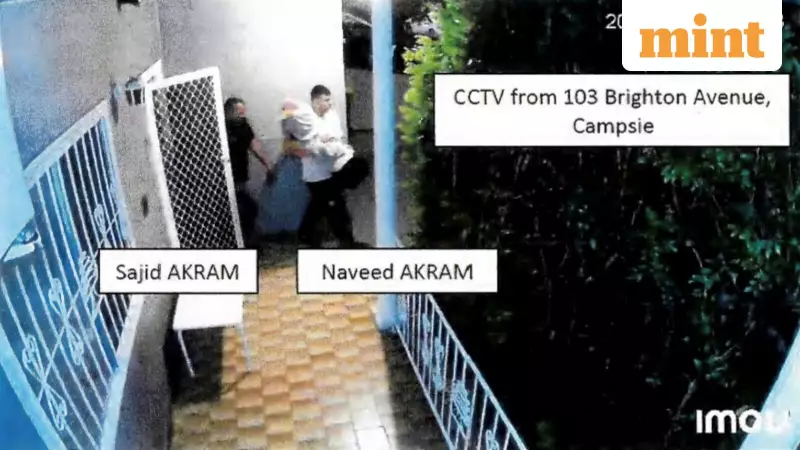
Further evidence of their preparation includes footage from October showing them conducting firearms training on a grassland, firing shotguns and moving tactically. In the three weeks leading up to the attack, they rented a room in the Sydney suburb of Campsie, leaving it in the early hours of the shooting day at 2:16 am.

The Attack and the Arsenal
On the day of the attack, which coincided with the start of the eight-day Hanukkah festival, the gunmen opened fire on a crowd of hundreds. CCTV footage reportedly shows them carrying two shotguns, a rifle, five improvised explosive devices (IEDs), and two homemade Islamic State flags wrapped in blankets.
They used a footbridge for an elevated firing position, taking partial cover behind concrete walls. Among their weapons was a tennis ball bomb containing explosives hurled at the crowd, which failed to detonate but was described by police as a viable IED. Authorities later identified three aluminum pipe bombs containing gunpowder and steel ball bearings, none of which exploded.
The largest IED was found in the trunk of Naveed Akram's car, parked near the footbridge and draped with the ISIS flags. It was also revealed that Sajid Akram legally owned six rifles and shotguns, exceeding a proposed new legal limit of four firearms for recreational shooters.
Aftermath and Charges
Police responded to the scene, wounding Naveed Akram and killing his father, Sajid. The attack stands as Australia's deadliest mass shooting since the 1996 Port Arthur massacre in Tasmania.
Naveed Akram now faces 59 criminal charges, including 15 counts of murder, 40 counts of causing harm with intent to murder related to survivors, and one count of committing a terrorist act. The antisemitic nature of the attack, targeting a Hanukkah celebration, has sent shockwaves across Australia and the world.
The released court documents underscore the severe threat posed by the attackers' prolonged planning and ideological motivation, raising serious questions about surveillance and firearm regulations in the country.






