Global Developments: Syria, Trade Deals, and Diplomatic Shifts
Welcome to this week's comprehensive analysis of major international events shaping global geopolitics and economics. From escalating conflicts in the Middle East to significant trade agreements and diplomatic realignments, the world stage is witnessing transformative developments that could redefine regional and international dynamics.
Syrian Conflict: Damascus-Kurdish Tensions and Regional Power Plays
In Syria, significant military developments have unfolded over the past fortnight as the transitional government led by Ahmed al-Sharaa in Damascus launched coordinated offensives against Kurdish forces in northern and eastern regions. The conflict originated in Aleppo before spreading, resulting in Kurdish retreats from several strategic towns. Many of these areas contained Kurdish SDF-run prison camps housing former ISIS fighters, creating complex security challenges.
The United States, traditionally allied with Kurdish SDF forces, evacuated numerous former ISIS combatants to Iraq. However, Damascus forces reportedly released a substantial number of these fighters, raising concerns about regional security implications. This conflict effectively undermines previous agreements to integrate Kurdish forces into Syria's new military and governance structures, a plan established just last year.
Senior Kurdish-Syrian politician Foza Yusif of the Democratic Union Party has accused Turkey of instigating Damascus's attacks against Kurdish populations. Despite announcing a fragile 15-day truce, Kurdish leaders now face the difficult decision of calling for general mobilization for self-defense.
The situation reveals broader strategic maneuvering involving Damascus, Turkey, Russia, and the United States. Al-Sharaa's current meetings in Moscow with Vladimir Putin suggest Russia aims to secure its military bases at Hmeimim airbase and Tartus naval facility. Despite expectations that al-Sharaa would expel Russian forces following Assad's 2024 ouster, this hasn't materialized.
Turkey, exercising considerable influence over Damascus, seeks to neutralize Syrian Kurds in Rojava. Russia appears to be negotiating a grand bargain: permitting Damascus and Turkey to act against Kurds in exchange for maintaining its military presence in Syria. Recent Russian evacuation from Qamishli airport in Kurdish-held northeast Syria may facilitate Damascus's impending assaults.
This arrangement potentially benefits Turkey while allowing Moscow to secure Ankara's cooperation regarding Black Sea operations amid European targeting of Russian shadow fleet ships in Ukraine. The United States faces strategic dilemmas, as prolonged hesitation to deter Damascus could mean losing a crucial strategic asset in Syria.
Update: Recent reports indicate a new agreement between Syria's interim government and Kurdish forces outlining phased integration into the Syrian army, followed by incorporation of Kurdish governance structures into state institutions. However, similar integration attempts in March last year failed, and current disagreements persist regarding implementation details.
India-EU Free Trade Agreement: A Strategic Economic Partnership
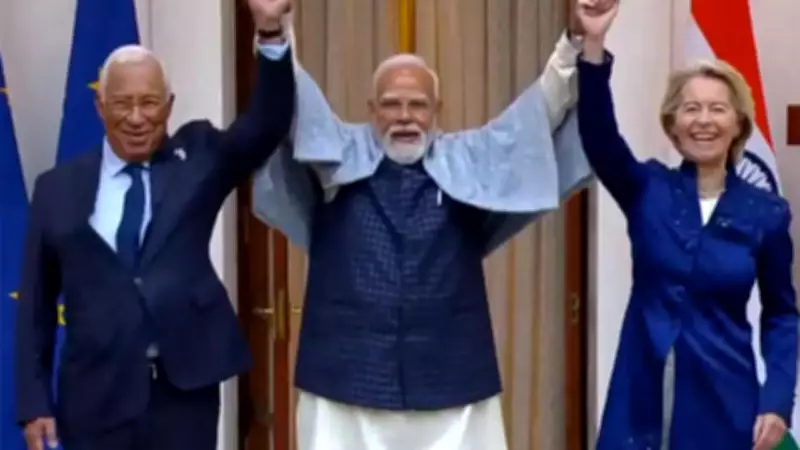
After eighteen years of negotiations, India and the European Union have concluded what many describe as a landmark free trade agreement. This comprehensive deal will eliminate or substantially reduce tariffs on over 99% of India's exports by trade value, particularly benefiting labor-intensive sectors including textiles, leather, footwear, tea, spices, gems, jewelry, and marine products previously impacted by US tariffs.
Conversely, the EU gains duty-free or reduced-tariff access for 97.5% of its exports by value, covering products like wine, beer, olive oil, confectionery, European automobiles, machinery, and pharmaceuticals. While the agreement requires formal approval from the EU Council and Parliament—a process potentially taking up to a year—its strategic significance cannot be overstated.
Facing American tariff pressures, both New Delhi and Brussels have demonstrated economic independence through this partnership. For Europe, this represents a crucial step toward strategic autonomy following disillusionment with unconditional US support during the Trump era. The agreement encourages EU defense industry revitalization and smarter geopolitical positioning.
India, meanwhile, signals willingness to expose protected industries like automobiles to international competition, fostering efficiency and global competitiveness. This diversified trade approach reduces dependency on limited markets, offering mutual economic resilience.
Russia-Ukraine Negotiations: Stalled Peace Efforts and Humanitarian Concerns
Following the Davos summit, Ukraine, Russia, and the United States have engaged in renewed talks to resolve the ongoing conflict. While Ukrainian representatives describe Russian participants as somewhat constructive, fundamental disagreements persist regarding Moscow's demands for Ukrainian surrender of Donbas territories, control over Zaporizhzhia Nuclear Power Plant, and security guarantees.
Russia opposes post-war NATO troop presence in Ukraine, a key component of proposed security guarantees. This creates logical inconsistencies, particularly when NATO membership remains unavailable to Ukraine per US policy. Moscow's demands essentially place resolution burdens on Ukraine despite Russian aggression.
Unconfirmed reports suggest potential energy ceasefire discussions, with former US President Trump claiming Putin agreed to week-long cessation of attacks on Ukrainian energy infrastructure as temperatures plummet. Such humanitarian pauses would provide relief to civilians suffering Russia's winter warfare tactics targeting energy systems.
With additional talks scheduled, observers hope for minor breakthroughs despite Russia's demonstrated reluctance to make meaningful concessions.
China's Military Purge: Leadership Shakeup and Strategic Implications
China's People's Liberation Army has undergone another significant leadership purge, with top general and Central Military Commission vice-chairman Zhang Youxia removed alongside joint operations head Liu Zhenli. This restructuring leaves the CMC with only two members: President Xi Jinping as chairman and anti-corruption official Zhang Shengmin.
The purge eliminates nearly all experienced PLA generals, raising questions about military preparedness and leadership stability. Official explanations cite disciplinary violations—typically Chinese euphemisms for corruption—though rumors suggest possible espionage or coup plotting.
Regardless of actual reasons, the situation reflects poorly on Xi's leadership. Either scenario—attempted coup or persistent corruption—suggests significant problems within Chinese power structures. If motivated by Xi's desire for absolute PLA control, it indicates concerning paranoia.
Strategically, this development complicates potential military actions against Taiwan, as inexperienced leadership might hesitate regarding complex operations. However, some analysts speculate Xi might pursue aggressive unification efforts to consolidate domestic support ahead of next year's party congress, despite Putin's Ukraine misadventure demonstrating such strategies' risks.
EU-Morocco Relations: Diplomatic Victory on Sahara Autonomy
The European Union has adopted a unified position supporting Morocco's Autonomy Plan for the Moroccan Sahara, marking a significant diplomatic achievement for Rabat. In a joint communique, EU members agreed that "genuine autonomy could represent one of the most realistic solutions" to this longstanding dispute rooted in colonial history.
Since Morocco's 1975 Green March reunified the Sahara, various international actors—particularly Algeria—have utilized the issue to constrain Moroccan regional influence. Algeria's support for Polisario Front separatists and maintenance of the Sahrawi Arab Democratic Republic has served strategic containment purposes.
EU's position shift reflects broader strategic recalibration amid US tariff pressures and geopolitical uncertainties. This alignment with US stance on Moroccan Sahara autonomy strengthens Rabat's international standing while demonstrating EU's growing foreign policy independence.