Telangana High Court Issues Landmark Ruling on Drunk Driving Enforcement
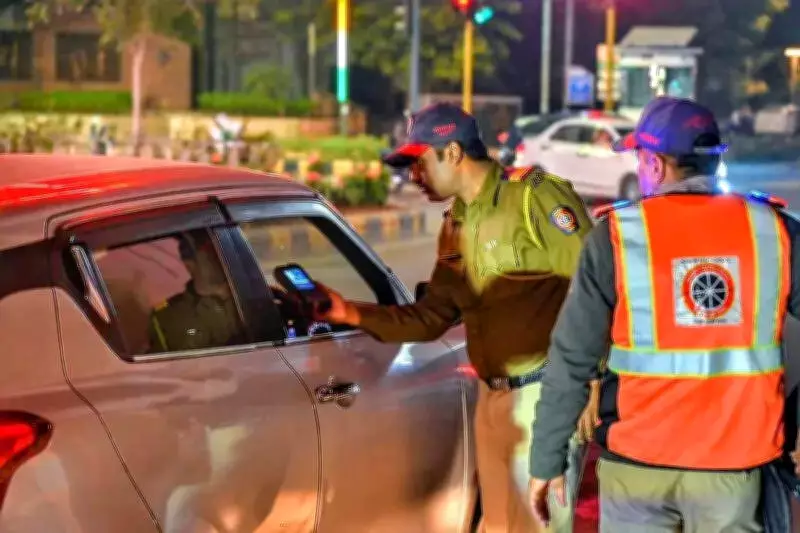
In a significant reinforcement of due process, the Telangana High Court has unequivocally declared that police authorities cannot seize vehicles merely because a driver is found intoxicated. The court has mandated that enforcement agencies must prioritize lawful handover procedures, ensuring that legal safeguards are strictly adhered to in all drunk driving cases.
Court's Directive on Vehicle Custody and Release
The ruling emerged from a writ petition concerning a Mahindra XUV 500 that was seized by Alwal traffic police in July 2025. Justice EV Venugopal, presiding over the case, emphasized that enforcement actions must follow established legal protocols. The judge issued a stern warning, stating that any violation of these directives would result in contempt of court proceedings.
Citing foundational principles from Supreme Court precedents, earlier high court rulings, and specific provisions of the Motor Vehicles Act, the court laid out comprehensive guidelines for police handling drunk driving incidents. These guidelines are designed to protect citizens' rights while maintaining public safety.

Detailed Guidelines for Police Procedure
According to the court's order, if a driver is detected under the influence of alcohol, they must be immediately prevented from operating the vehicle. However, the police are required to facilitate a lawful transfer of the vehicle under specific conditions:
- If a co-passenger is sober and possesses a valid driving licence, officers must allow that individual to take charge of the vehicle.
- If the driver is alone, police must contact a relative or friend to assume custody of the vehicle.
- Only when no authorized person is available can police take temporary custody, moving the vehicle to a nearby station for safekeeping.
The court further clarified that even in temporary custody scenarios, the vehicle must be promptly released upon the production of valid documents. These include the registration certificate, identity proof, and a driving licence, ensuring no unnecessary delays or hardships for vehicle owners.
Legal Framework and Prosecution Protocols
The bench made a critical observation that while police may prosecute the driver or owner by filing a chargesheet before a magistrate within three days, the vehicle itself cannot be used as a punitive measure. This distinction underscores the court's commitment to separating enforcement from unjust penalties.
Magistrates have been directed to accept chargesheets within three days of vehicle seizure, in strict alignment with Motor Vehicles Act provisions. This procedural clarity aims to streamline legal processes and prevent bureaucratic delays.
Additionally, the court instructed all police officers to rigorously follow Rule 448-A of the Telangana Motor Vehicles Rules. This rule explicitly outlines the procedures for seizure, custody, prosecution, and release of vehicles, providing a clear legal framework for enforcement actions.
Implications for Law Enforcement and Public Safety
This landmark ruling represents a pivotal shift in drunk driving enforcement in Telangana. By emphasizing due process and legal safeguards, the High Court seeks to balance public safety concerns with the protection of individual rights. The guidelines ensure that police actions are proportionate, lawful, and respectful of citizens' property rights.
The court's decision is expected to set a precedent for similar cases across the state, promoting accountability and transparency in law enforcement. It reinforces the judiciary's role in upholding constitutional principles and ensuring that executive actions remain within legal boundaries.