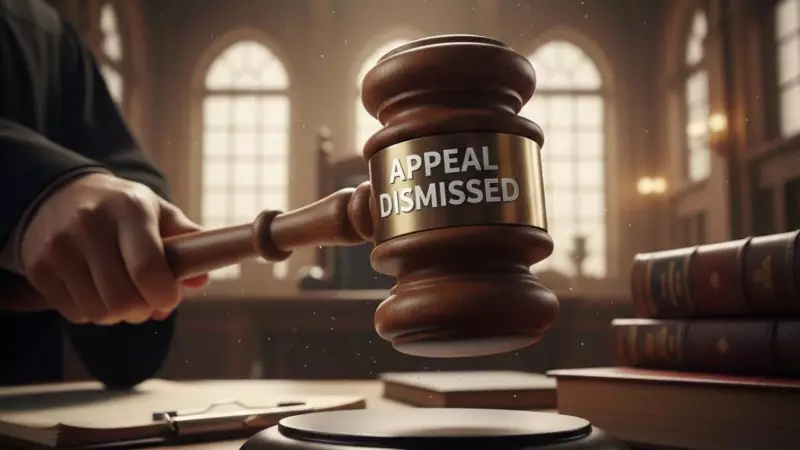
In a significant ruling, the Telangana High Court has dismissed an appeal by a private manufacturing company, Sanghi Polymers Private Limited, against a demand for over Rs 4.21 crore in outstanding electricity dues. The court upheld the claim by the Southern Power Distribution Company of Telangana Ltd (TGSPDCL), dealing a blow to the company's attempt to avoid the decades-old liability.
The Core of the Legal Dispute
The case revolved around Grid Support Charges (GSC) and accumulated interest for the financial years spanning from 2002-03 to 2008-09. The TGSPDCL had issued a demand letter in August 2022, followed by a disconnection threat in October 2023, for a total sum of Rs 4,21,39,651. This amount comprised a principal of Rs 1,03,57,419 and a staggering interest component of Rs 3,17,82,232.
Sanghi Polymers, based in HayathNagar, Rangareddy district, challenged this demand on multiple grounds. The company argued that the liability primarily rested with another group company, which is currently under liquidation. They also contended that the demand was time-barred under Section 56(2) of the Electricity Act, as it was raised years after the charges first became due.

Court's Reasoning and Final Verdict
A division bench comprising Justice Moushumi Bhattacharya and Justice Gadi Praveen Kumar delivered the judgment on December 30, 2025, upholding an earlier single judge's order from November 2025. The bench found the company's arguments unconvincing.
Crucially, the court noted that Sanghi Polymers had entered into a fresh agreement with the discom in May 2020, where it undertook to comply with all tariff provisions and clear pending dues. This agreement significantly weakened the company's defense. Furthermore, the bench pointed to a Supreme Court judgment from November 2019 (Transmission Corporation of Andhra Pradesh Limited vs. M/s. Rain Calcining Limited) that had conclusively settled the legality of the GSC levy.
On the limitation issue, the court agreed that the demand was valid as the quantum became enforceable only after the Supreme Court's 2019 ruling, and TGSPDCL acted within a reasonable period thereafter.
A Stern Message on Consumer Responsibility
The court's ruling went beyond the specific case, delivering a strong message on the societal obligation of consumers, especially industrial ones, towards public utilities. The bench emphasized that electricity is a vital and finite resource essential for daily life and commerce.
"Their generation, transmission and distribution involve significant public investment and infrastructure. It is therefore necessary to use such resources responsibly, efficiently and in accordance with law… ensuring that lawful charges determined under the statutory and regulatory framework are duly paid," the bench remarked.
The High Court found no error in the earlier dismissal of the company's writ petition and consequently dismissed the appeal. The court also imposed no order as to costs on the parties. This judgment reinforces the authority of state discoms to recover legitimate charges and underscores the binding nature of contractual agreements entered into by consumers.