Telangana's Head of Police Force Appointment Enters Critical Phase
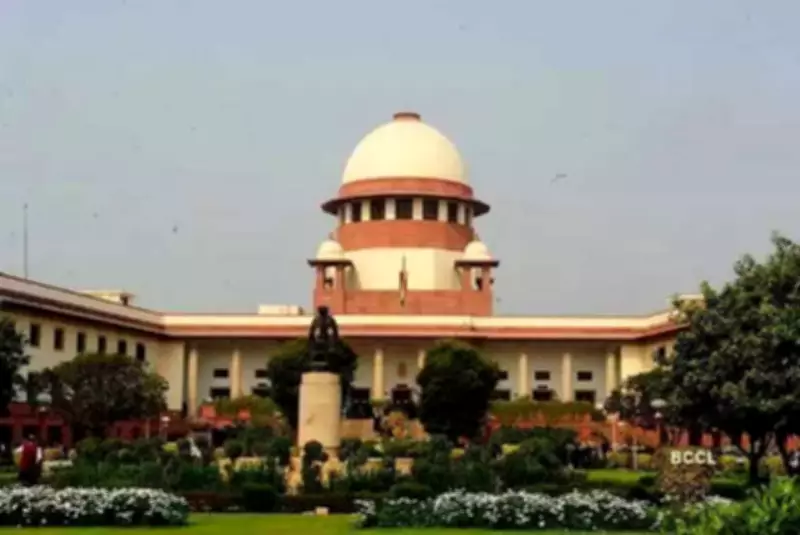
With the Supreme Court mandating a four-week deadline for the Telangana government to receive a shortlisted panel of officers for the crucial Head of the Police Force (HoPF) position, all eyes are on how the Union Public Service Commission (UPSC) will navigate the selection of the top three senior-most officers. This process has gained heightened significance due to procedural delays and specific eligibility criteria that are now under intense scrutiny.
Understanding the UPSC's Appointment Guidelines
According to established UPSC protocols for appointing an officer to the DGP (HoPF) role, the state government must first submit a comprehensive list of DGP-rank officers from its own cadre. A particularly contentious guideline involves the quantum of service remaining for these candidates. The rules explicitly state: "The officer(s) should have residual service of six months or more from the date of occurrence of vacancy in the post of DGP (HoPF)." This clause has become a focal point in the current selection drama.
Furthermore, the guidelines stipulate that the state government should forward this list of DGP-rank officers to the UPSC for empanelment at least three months before the vacancy actually arises, ensuring a smooth transition and adequate vetting time.
A History of Delays and Procedural Hurdles
The last HoPF appointed through a UPSC panel, Anurag Sharma, retired in November 2017 after completing a two-year tenure. However, the Telangana government did not initiate the process by sending a list of DGP-rank officers to the UPSC for HoPF selection until April 2025—a significant delay that triggered procedural objections. The UPSC rejected this initial list and subsequently returned a second list submitted in December, compounding the administrative backlog.
Now, with the Supreme Court's directive to finalize the HoPF appointment within a strict four-week window, officers within the force are keenly observing how the UPSC will interpret the "residual service of six months" rule. "We are assuming that UPSC will use the list sent by the state government in December for selecting the three senior-most officers. One has to wait and see if the commission counts former in-charge DGP Jitender's superannuation at the end of September 2025 as the date of vacancy. If that is the case, B Shivadhar Reddy would be eligible to be empanelled," revealed a senior police officer, highlighting the uncertainty surrounding key dates.
Profiles of the Senior Contenders
The senior-most officer on the submitted list is 1991-batch officer CV Anand, who boasts an impressive two years and four months of residual service, positioning him as a strong candidate. Following closely in seniority is 1994-batch officer Vinayak Prabhakar Apte, with three years and eight months of service remaining, making him another viable option. The third name on the list is his batchmate, B Shivadhar Reddy, who has only about three months of service left until April 2026, placing his eligibility in question under the six-month rule.
Other notable DGP-rank officers from the Telangana cadre include 1994-batch officers Soumya Mishra and Shikha Goel, though their positions in the current selection process remain less clear. "The government will pick one of the three officers from the list sent by UPSC for the post of HoPF. As per the Supreme Court directions in the Prakash Singh vs Union of India case, the new HoPF will have a minimum tenure of two years, irrespective of his or her date of superannuation," explained a former top cop, underscoring the tenure security that comes with the appointment.
The Broader Implications for Police Administration
This appointment process is not merely an administrative formality but a critical test of adherence to judicial mandates and procedural integrity. The Supreme Court's intervention underscores the importance of timely and transparent appointments in top police roles, which are essential for maintaining law and order and public trust. The outcome will set a precedent for how residual service rules are applied in future high-level police appointments across India.
As the four-week deadline progresses, the Telangana police force and political observers await the UPSC's final decision, which will determine the leadership landscape for the state's law enforcement for years to come. The interpretation of the six-month rule could redefine eligibility criteria and influence career trajectories within the Indian Police Service, making this a landmark case in police administration.