Telangana's Police Chief Appointment Hinges on UPSC's Interpretation of Key Rule
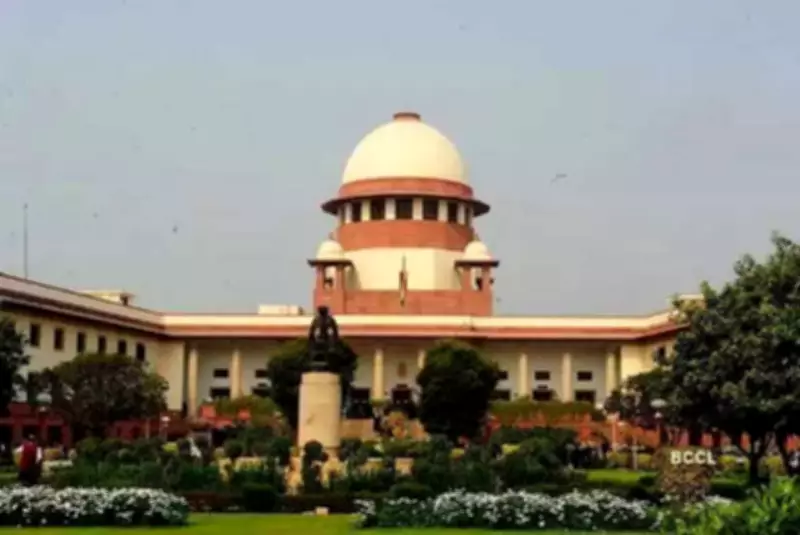
With the Supreme Court mandating a four-week deadline for the Telangana government to receive a shortlisted panel of officers for the Head of the Police Force (HoPF) position, all eyes are on how the Union Public Service Commission (UPSC) will determine the top three senior-most officers. This process has gained heightened attention due to specific guidelines governing the appointment.
Understanding the UPSC Guidelines for DGP (HoPF) Appointment
According to established UPSC protocols for appointing an officer to the DGP (HoPF) post, the state government must submit a list of DGP-rank officers from its cadre. One particularly significant rule that has drawn considerable scrutiny pertains to the quantum of service remaining for eligible officers. The guidelines explicitly state: "The officer(s) should have residual service of six months or more from the date of occurrence of vacancy in the post of DGP (HoPF)."
Furthermore, the regulations specify that the state government should forward the list of DGP-rank officers to the UPSC for empanelment at least three months before the vacancy arises. This procedural requirement is designed to ensure a smooth and timely transition in leadership.
Historical Context and Recent Developments
The last HoPF appointed through a UPSC panel was Anurag Sharma, who retired in November 2017 after serving a two-year tenure. Notably, the Telangana government did not submit a list of DGP-rank officers to the UPSC for the HoPF selection procedure until April 2025. The UPSC raised objections to this delayed submission and returned the list sent in April, subsequently repeating this action with a second list submitted in December.
Now, with Supreme Court directions to finalize the HoPF appointment process within four weeks, officers within the police force have expressed keen interest in how the UPSC will interpret the "residual service of six months" stipulation. "We are assuming that UPSC will use the list sent by the state government in December for selecting the three senior-most officers. One has to wait and see if the commission counts former in-charge DGP Jitender's superannuation at the end of September 2025 as the date of vacancy. If that is the case, B Shivadhar Reddy would be eligible to be empanelled," remarked a senior police officer familiar with the proceedings.
Seniority and Service Tenure of Eligible Officers
The senior-most officer on the submitted list is 1991-batch officer CV Anand, who has two years and four months of service remaining. Following him in seniority is 1994-batch officer Vinayak Prabhakar Apte, with three years and eight months of service left. The third officer on the list is his batchmate B Shivadhar Reddy, who has only about three months of service remaining until April 2026.
Other DGP-rank officers from the Telangana cadre include 1994-batch officers Soumya Mishra and Shikha Goel. "The government will pick one of the three officers from the list sent by UPSC for the post of HoPF. As per the Supreme Court directions in the Prakash Singh vs Union of India case, the new HoPF will have a minimum tenure of two years, irrespective of his or her date of superannuation," explained a former top police official, highlighting the tenure security mandated by judicial precedent.
The Path Forward and Broader Implications
This appointment process underscores the intricate balance between administrative guidelines, judicial oversight, and operational needs within law enforcement. The UPSC's forthcoming decision will not only determine Telangana's next police chief but also set a potential precedent for how residual service rules are applied in similar high-stakes appointments across India. As the four-week deadline progresses, stakeholders await clarity on whether service calculations will align with vacancy dates or superannuation timelines, a determination that could significantly impact the eligibility and selection of the final candidate.