Three Bangladeshi Nationals Deported from Kendrapada District
In a significant enforcement action, three Bangladeshi nationals who had been residing illegally in Kendrapada district were deported to Bangladesh last month. The deportation was carried out in strict accordance with directions issued by the Ministry of Home Affairs (MHA), as confirmed by police officials on Friday.
Details of the Deportation Case
All three individuals were staying in Garapur village on the outskirts of Kendrapada town. They were initially detained by local police on November 18 last year after failing to produce valid citizenship documents during routine verification checks. Following due legal processes, they were formally deported to Bangladesh by the Union government on December 24.
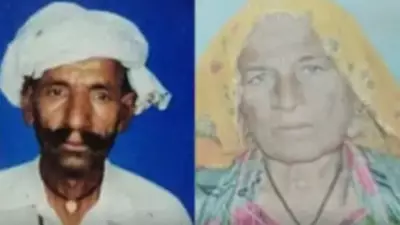
Kendrapada Superintendent of Police Siddharth Kataria provided specific details about the operation. "The deported individuals have been identified as 65-year-old Muntaz Khan, 59-year-old Insaan Khan, and 70-year-old Ameena Bibi," he stated. "Their cases were processed through proper channels leading to their eventual deportation."

Police Intensify Efforts Against Illegal Immigration
SP Kataria emphasized that police have significantly intensified efforts to identify and take decisive action against illegal immigrants residing without valid documentation across the district. "A dedicated special team has been formed specifically to trace and identify illegal migrants operating within Kendrapada district," he explained.
The police official further elaborated on the broader security implications, noting that "the detection, detention, and subsequent deportation of foreign nationals staying illegally in the country represents an ongoing, continuous process that remains absolutely crucial from the perspective of national security and border integrity."
Local Reactions and Document Verification
The deportation has generated mixed reactions within the local community. Sk Sahid, a 56-year-old resident of Garapur village, expressed surprise at the development. "These individuals possessed what appeared to be legitimate photo identity cards, Aadhaar cards, and other supporting documents," he remarked. "We were genuinely surprised when authorities declared them illegal immigrants and proceeded with deportation."
This highlights the sophisticated methods sometimes employed by illegal immigrants to establish residency, making detection increasingly challenging for enforcement agencies.
Political Directives and Statewide Statistics
The action aligns with clear political directives issued at the highest levels of state governance. On June 9 last year, during his maiden visit to Kendrapada district, Chief Minister Mohan Charan Majhi conducted a comprehensive review meeting where he explicitly directed both district administration and police authorities to take strict, uncompromising legal action against all identified illegal immigrants.
In March 2025, the Chief Minister provided detailed assembly disclosures regarding the scale of illegal immigration across Odisha. He informed the legislative body that 3,738 Bangladeshi infiltrators had been identified statewide, with Kendrapada district accounting for the highest concentration at 1,649 individuals.
The statewide breakdown revealed significant numbers in other districts as well:
- Jagatsinghpur: 1,112 identified individuals
- Malkangiri: 655 identified individuals
- Bhadrak: 199 identified individuals
- Nabarangpur: 106 identified individuals
- Bhubaneswar: 17 identified individuals
Ongoing Legal Proceedings and Future Implications
In a written statement presented to the assembly on December 3 last year, Chief Minister Majhi provided further operational updates. He confirmed that 51 illegal Bangladeshi nationals had been successfully traced through coordinated efforts, with 49 already deported through established protocols.

The remaining two individuals were discovered using forged passport documents and are currently facing formal criminal proceedings under relevant sections of Indian law. This underscores the multifaceted approach being adopted—combining deportation with legal prosecution where fraudulent documentation is involved.
The Kendrapada case represents both a specific enforcement success and a microcosm of broader border security challenges facing authorities. As police continue their intensified verification drives and dedicated teams work to identify undocumented residents, similar actions are expected across other high-prevalence districts in Odisha.