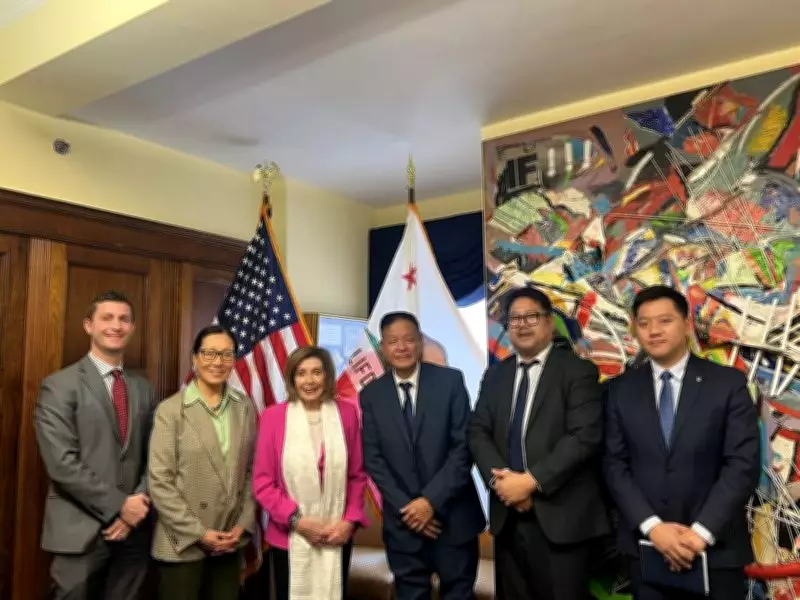
Tibetan Leader Spotlights Dalai Lama's Succession and Religious Freedom at Global IRF Summit 2026
In a significant address at the International Religious Freedom (IRF) Summit 2026, Sikyong Penpa Tsering, the political leader of the Tibetan government-in-exile, brought the sensitive issue of the Dalai Lama's succession to the forefront of international discourse. The summit, a key platform for discussing religious liberties worldwide, served as a stage for Tsering to highlight ongoing concerns about Tibet's religious autonomy under Chinese rule.
Succession Concerns and China's Stance
During his speech, Sikyong Penpa Tsering emphasized that the question of who will succeed the 14th Dalai Lama, Tenzin Gyatso, is not merely a Tibetan matter but a global issue with implications for regional stability and human rights. He pointed out that the Dalai Lama, now in his late 80s, has previously suggested that his reincarnation might not be recognized within Tibet due to China's policies, which assert state control over religious appointments.
China has consistently maintained that it holds the authority to approve any future Dalai Lama, a position that Tsering criticized as infringing on Tibetan Buddhist traditions and religious freedom. He argued that this stance undermines the spiritual and cultural heritage of Tibetans, who view the Dalai Lama as a central figure in their faith and identity.
Religious Freedom in Tibet Under Scrutiny
Beyond succession, Tsering used the IRF Summit to shed light on broader issues of religious repression in Tibet. He detailed instances where Tibetan Buddhists face restrictions on worship, monastery operations, and the teaching of their language and culture. "The suppression of religious practices in Tibet is a direct violation of international human rights norms," Tsering stated, calling for increased global pressure on China to uphold religious freedoms as outlined in United Nations declarations.
He noted that despite China's claims of protecting religious diversity, reports from human rights organizations indicate a pattern of surveillance, arbitrary detentions, and forced sinicization in Tibetan regions. Tsering urged summit attendees, including diplomats and activists, to advocate for tangible actions to safeguard Tibetan religious rights.
Global Implications and Responses
The IRF Summit 2026, attended by representatives from various countries and religious groups, provided a forum for Tsering's message to resonate internationally. His remarks sparked discussions on how global powers might address China's policies in Tibet, with some participants expressing support for Tibetan self-determination and others calling for diplomatic engagement to ease tensions.
- Tsering's address underscored the urgency of the succession issue, as the Dalai Lama's advanced age makes it a pressing concern for Tibetans worldwide.
- He highlighted that religious freedom in Tibet is intertwined with political autonomy, making it a complex challenge for international relations.
- The summit served as a reminder of Tibet's ongoing struggle for cultural preservation amid China's governance.
In conclusion, Sikyong Penpa Tsering's intervention at the IRF Summit 2026 successfully elevated the Dalai Lama's succession and Tibetan religious freedom to a global audience. By framing these issues within the context of human rights and international law, he aimed to galvanize support for Tibetan causes and prompt reevaluation of China's role in the region. As the world watches, the outcomes of such dialogues could influence future policies and actions regarding Tibet's religious and political landscape.