

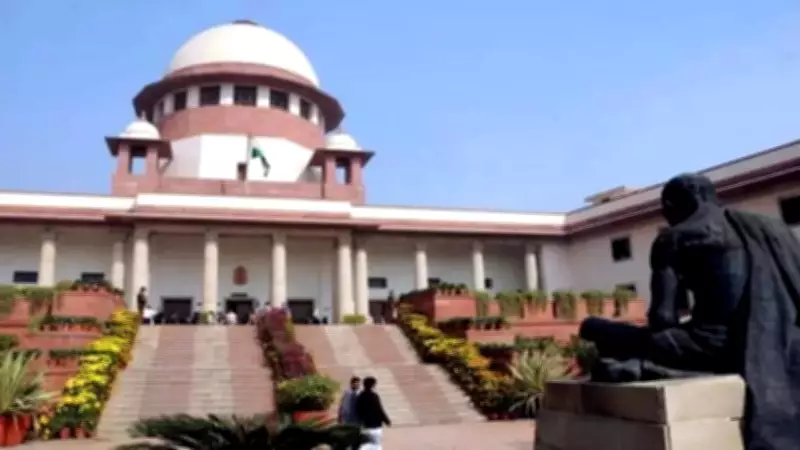
Tamil Nadu Religious Body Challenges Supreme Court's Definition of 'Industry' for Temples
In a significant legal development, the Tamil Nadu Hindu Religious & Charitable Endowments Commissioner has raised fundamental questions about the Supreme Court's 1978 definition of 'industry' and its applicability to temples. Appearing before a nine-judge constitutional bench led by Chief Justice of India Surya Kant, senior advocate Jaideep Gupta, representing the state body, argued that temple activities bear no resemblance to industrial operations or disputes covered under the Industrial Disputes Act of 1947.
Core Argument: Temples Lack Commercial Character and Profit Motive
Gupta presented a detailed critique, emphasizing that the established legal definition of 'industry' requires a unit where employers and employees collaborate to produce goods or services for human needs, with a clear commercial character or profit motive. He contended that temples fundamentally operate differently, with most being maintained through surplus funds generated from donations to a select few prominent institutions, rather than through industrial or commercial activities.
The commissioner's position highlights a long-standing tension between traditional religious administration and modern legal frameworks. The Tamil Nadu Hindu Religious & Charitable Endowments body oversees the administration, management, and maintenance of numerous Hindu institutions, temples, and charitable endowments across the state, making this challenge particularly consequential for religious governance.

Historical Context and Legal Implications
This legal questioning revisits a precedent set nearly five decades ago, potentially opening the door for reevaluating how religious entities are classified under labor and industrial laws. The outcome could influence:
- The employment status and rights of temple staff
- Financial management and accountability of religious institutions
- The broader interpretation of 'industry' in non-commercial sectors
As the nine-judge bench considers these arguments, the case represents a pivotal moment in Indian jurisprudence, balancing religious autonomy with regulatory oversight. The commissioner's challenge underscores the unique nature of temple economies, which rely on devotional contributions rather than market-driven production, setting them apart from conventional industrial enterprises.






