

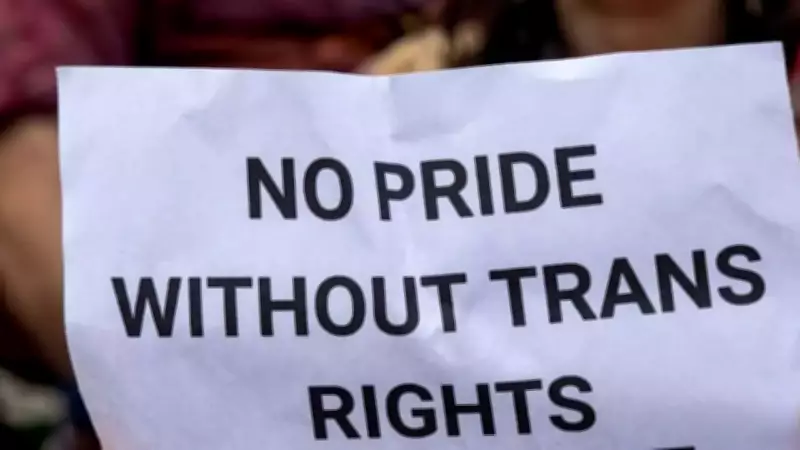
Transgender Community Mobilizes Against Proposed Legal Amendments Threatening Self-Identification Rights
In a powerful display of collective concern, Kabir Maan, a transman and qualified special educator, stood before a packed press conference in New Delhi on Monday, holding his Transgender ID and certificate issued under the Transgender Persons (Protection of Rights) Act, 2019. With visible anxiety, he articulated how the proposed Transgender Persons (Protection of Rights) Amendment Bill, 2026, would create significant barriers for his community in obtaining these crucial identity documents.
Core Issue: Removal of Self-Perceived Gender Identity Clause
The primary concern revolves around the amendment bill's omission of the clause that previously allowed "self perceived gender identity" to serve as the foundation for determination and acquisition of transgender certificates. This fundamental change in definition, Maan emphasized, threatens to exclude numerous individuals from legal recognition.
"The first question that consumed my thoughts upon learning about this amendment bill was: What will become of my future? Will my hard-won identity be subjected to questioning after all the struggle I endured to obtain this certificate?" Maan expressed passionately. "How can a medical board presume to decide my gender identity?"

Amplifying Fear and Uncertainty
For Maan and countless others, the proposed amendments represent a devastating blow, exacerbating the fear, anxiety, and uncertainty that already pervade transgender lives. Despite possessing official identity documents and professional qualifications, Maan continues to confront persistent stigma and discrimination in daily life.
He was joined by numerous community members demanding immediate withdrawal of the bill, which was introduced in the Lok Sabha just last week. They argue compellingly that the amendments directly violate the Supreme Court's landmark 2014 NALSA versus Union of India judgment, which explicitly protects the constitutional right to self-determination of gender identity.
Legal and Community Backlash
Raghavi S, a transwoman and Supreme Court lawyer, stated unequivocally: "We are very clear we want this bill to be taken back as it is." She warned that after years of arduous struggle for recognition and access, these amendments would force transgender persons back into a system designed to deny their fundamental rights.
In a strongly worded collective statement, the community declared: "The bill does not merely amend a statute; it poses an existential threat to our hard-won dignity, reinstates colonial-era stigma, and turns the State against the very people it was solemnly pledged to protect. Hence, we, the concerned transgender and queer individuals and collectives, unequivocally condemn and oppose this bill."
Five Key Principles Under Threat
The statement outlined how the current legal framework recognizes transgender identity through five essential principles:
- Self-identification as the primary basis
- A streamlined administrative process
- No compulsory medical procedures
- Recognition of non-binary identities
- Access to gender-affirming care
The amendment bill systematically dismantles this progressive model, discriminating against trans men, trans women, genderqueer people, and gender non-binary persons. Since this is the sole legislation recognizing the "transgender person" category, the bill creates a dangerous lacuna in Indian law itself.
Alarming Criminal Provisions
Community members raised additional alarms about proposed criminal provisions in Section 18, which would impose imprisonment of up to five years for "alluring" or "forcing" someone to become transgender. Critics note there exists no credible evidence that such conduct represents a social pattern in India.
The statement cautioned: "This provision could easily be weaponized to harass, target, and incarcerate individuals, communities, networks, organizations, parents, supportive adults, and service providers. Particularly vulnerable are the 'socio-cultural communities' that have historically protected and nurtured transgender individuals."

Political Mobilization and Government Consultation Failure
With Parliament currently in session, the transgender community is intensifying outreach to Members of Parliament across party lines, seeking support for the bill's withdrawal. They have also questioned the government's failure to conduct proper consultations with stakeholders before introducing the amendment legislation.
As Kabir Maan's poignant demonstration highlighted, this legal battle transcends paperwork—it represents a fight for dignity, recognition, and the fundamental right to define one's own identity in a nation still grappling with inclusion.





