Transgender Rights Activists File Supreme Court Petition Against 2026 Amendment Act
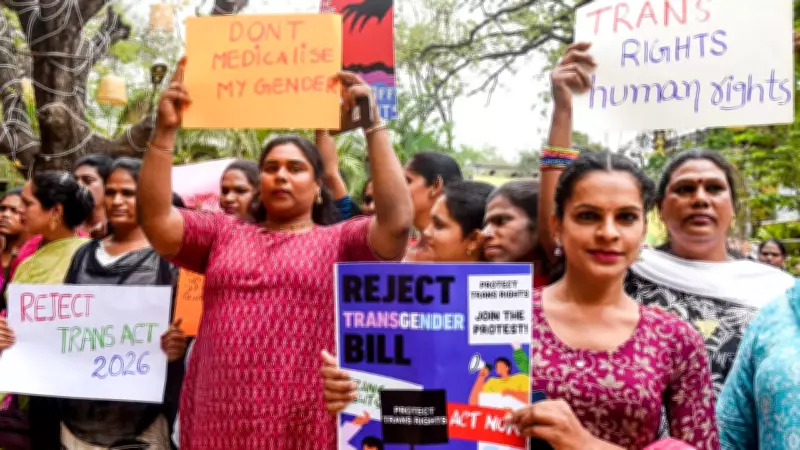
In a significant legal development, prominent transgender rights activists Laxmi Narayan Tripathi and Zainab Patel have filed a writ petition before the Supreme Court of India challenging the constitutional validity of the Transgender Persons (Protection of Rights) Amendment Act, 2026. This legal action comes less than a week after the controversial amendments were officially notified as law, sparking widespread concern within the transgender community and among human rights advocates.
Background of the Controversial Legislation
The Bill to amend the original 2019 transgender rights legislation was passed by Lok Sabha on March 24 and subsequently by Rajya Sabha on March 25 through a voice vote. The legislative process occurred amid strong objections from opposition parties, who demanded that the bill be referred to a standing committee for more comprehensive consultations and wider stakeholder input. Despite these objections, the bill received presidential assent from President Droupadi Murmu on March 30, 2026, thereby becoming enforceable law.
The amendments introduced several significant changes to the existing legal framework, including a redefinition of transgender persons that omits "self-perceived identity" as the basis for obtaining transgender certificates. Instead, the amended law establishes a medical board approval process and introduces other provisions that petitioners argue fundamentally alter the recognition of transgender identity in Indian law.

Petitioners' Constitutional Challenge
At the heart of the legal challenge lies a fundamental constitutional question: whether the state possesses the authority to redefine personal identity in a manner that potentially infringes upon an individual's right to self-determination. The petitioners, both of whom served as lead petitioners in the landmark NALSA v. Union of India (2014) case that first recognized transgender rights under the Constitution, argue that the 2026 amendment represents a significant departure from established legal principles.
In their comprehensive petition, Tripathi and Patel contend that the amendment fundamentally changes how transgender identity is understood within the legal system. "It moves away from the principle of self-identification and replaces it with a narrow, state-driven definition based on fixed categories and medical conditions," the activists emphasize. "In doing so, it departs from what the Supreme Court had already affirmed in NALSA that gender identity is a matter of personal dignity and choice."
Specific Legal Concerns Raised
The petition highlights several specific concerns regarding the amended legislation:
- Closed Framework Definition: The replacement of the earlier, more inclusive definition of transgender persons with what petitioners describe as a "closed framework" that could potentially exclude many individuals who do not fit within specific categories
- Removal of Self-Perceived Identity: The elimination of the explicit right to self-perceived gender identity as the basis for legal recognition
- Blurred Legal Distinctions: Provisions that petitioners argue create confusion between genuine transgender identity and situations involving coercion or trafficking
- Risk to Existing Rights: Concerns that identity documents issued under the previous legal framework may now be jeopardized
Constitutional and Human Rights Arguments
The legal challenge is grounded in alleged violations of fundamental rights protected under Articles 14 (right to equality), 15 (prohibition of discrimination), 19 (freedom of speech and expression), and 21 (right to life and personal liberty) of the Indian Constitution. Additionally, the petition references established principles of international human rights law that recognize gender identity as a fundamental aspect of human dignity.

In a powerful joint statement, Tripathi and Patel articulated their concerns: "This law takes us backwards. In NALSA, the Supreme Court affirmed that our identity comes from within, not from a checklist created by the State. Today, that core principle is being undone. As petitioners in that very case, we have returned to the Court because this amendment does not just change definitions, it changes lives. It risks pushing many transgender persons outside the protection of the law itself."
They further emphasized: "This is not a technical correction. It is a constitutional question about dignity, autonomy, and whether the State can decide who we are."
Petitioners' Background and Credentials
Both petitioners bring substantial experience and credibility to their legal challenge. Laxmi Narayan Tripathi serves as the founder of Astitva Trust and the National Network for Transgender Persons, while Zainab Patel is recognized as a Diversity, Equity, and Inclusion strategist and founder of the Pride Business Network Foundation. Significantly, both activists previously served as members of the National Council for Transgender Persons, the statutory body established under the original 2019 legislation.
The Supreme Court's consideration of this petition will likely have far-reaching implications for transgender rights in India, potentially determining whether the state's authority to define identity can override individual self-determination in matters of gender identity.