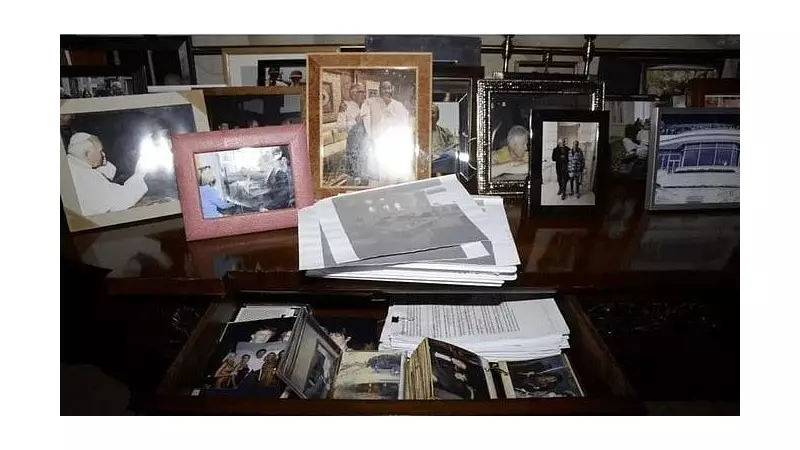
A significant development has emerged in the ongoing public scrutiny of the Jeffrey Epstein case. A batch of 16 photographs, which included images featuring former US President Donald Trump, has been removed from the publicly accessible court documents hosted on a United States government website. This disappearance has sparked questions about the completeness and transparency of the records related to the convicted sex offender.
What Exactly Was Removed?
The incident centers on the Public Access to Court Electronic Records (PACER) system, the official portal for federal court documents in the US. A specific file, labelled as "Exhibit 1" from a 2016 defamation lawsuit involving Epstein's associate Ghislaine Maxwell, was altered. Originally, this exhibit contained a collection of 35 photographs. However, it was recently replaced with a version containing only 19 images.
The missing 16 pictures are reported to have included several photographs of Donald Trump with Epstein and Maxwell. Other removed images allegedly showed former US President Bill Clinton, Britain's Prince Andrew, and various unidentified young women. The original exhibit was part of the lawsuit filed by Virginia Giuffre, one of Epstein's accusers, against Maxwell.

Timeline and Official Response
The removal came to light after journalists and independent researchers tracking the case noticed the discrepancy. The switch in documents is believed to have occurred in late December 2023 or early January 2024. When questioned, a spokesperson for the Southern District of New York courts, where the case was filed, stated that the exhibit was replaced because the initial filing had not properly redacted the names of certain non-parties, as required by a court order.
The official explanation asserts that the court clerk's office simply uploaded a corrected version of the exhibit. However, this clarification has not fully quelled concerns. Critics argue that replacing the entire set of photographs, rather than simply redacting the names, removes contextual visual evidence from the public record.
Broader Implications and Reactions
This event has intensified the debate over access to information in high-profile cases involving powerful individuals. The Epstein case, with its connections to global elites, has long been shrouded in secrecy and conspiracy theories. The unexplained removal of photographic evidence, however procedural, fuels further speculation and undermines public trust.
Legal transparency advocates have expressed alarm. The PACER system is meant to be a reliable repository, and alterations to filed evidence without a clear, publicized court order are unusual. The incident raises critical questions: Who requested the change? Was the order to replace the exhibit made by a judge, or was it an administrative decision? The lack of a detailed public log for such changes is seen as a systemic issue.
Furthermore, the timing is notable. The disappearance was reported just before a scheduled release of a new batch of sealed court documents related to the Epstein saga in early January 2024. This confluence of events has led observers to scrutinize the document release process more closely, worrying that other material may be altered or withheld.
In conclusion, the vanishing of these 16 photographs from a key government website is more than a clerical update. It touches on core principles of judicial transparency and public accountability. While officials cite procedural compliance, the action has inadvertently amplified doubts about the full story behind the Jeffrey Epstein network. It serves as a reminder of the challenges in maintaining an open record when cases involve the rich, powerful, and politically connected.