Trump Issues Stark Warning as Pakistan-Afghanistan Border Conflict Intensifies
The United States has officially declared its support for Pakistan's right to defend itself against attacks originating from Taliban militants based in Afghanistan. This statement from the US State Department comes at a critical juncture, as cross-border hostilities between Pakistan and the Taliban-controlled Afghan government have escalated dramatically, resulting in significant casualties on both sides.
Escalating Violence and Regional Tensions
Recent developments have seen Pakistan launch targeted airstrikes across the Afghan border, aimed at dismantling Taliban militant positions. In response, the Taliban has executed retaliatory attacks, leading to a sharp increase in violence. Both nations have reported heavy losses among military personnel and civilians, raising alarms about the potential for a broader regional conflict.
The situation is particularly volatile given Pakistan's status as a nuclear-armed state and the Taliban's reliance on guerrilla warfare tactics. Analysts warn that South Asia is now teetering on the brink of a dangerous and protracted war, with implications for global security.

US Position and Diplomatic Implications
In its official communication, the US State Department expressed deep sorrow over the loss of life and acknowledged the escalating fighting. However, the core message was clear: Washington recognizes Pakistan's legitimate security concerns and its right to respond to threats from the Taliban, which the US designates as a Specially Designated Global Terrorist group.
This stance marks a significant diplomatic move, as it implicitly aligns US policy with Pakistan's military actions, while also putting pressure on the Taliban to cease hostilities. The US has long sought to balance its relationships in the region, and this declaration could reshape dynamics in the ongoing conflict.
Trump's Controversial Remarks and Potential Intervention
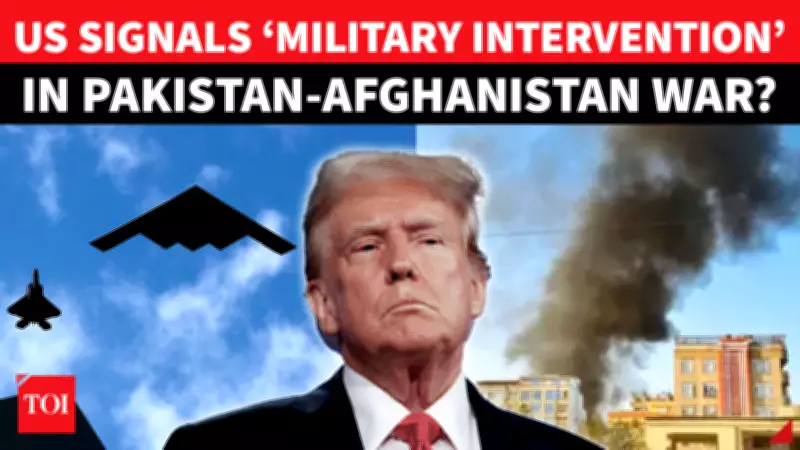
Adding to the tension, former US President Donald Trump has made a shocking declaration regarding the conflict. In a recent statement, Trump hinted that he would consider intervening under certain conditions, though he did not specify the exact triggers for such action. His comments have sparked widespread speculation about the potential for US involvement, should the situation deteriorate further.
Trump's remarks underscore the high stakes involved, as international observers monitor the conflict closely. The possibility of external intervention, whether diplomatic or military, adds another layer of complexity to an already fraught situation.
Broader Regional and Global Concerns
The Pakistan-Afghanistan border conflict is not occurring in isolation. It is part of a larger pattern of instability in South Asia, with implications for neighboring countries and global powers. The US's supportive stance toward Pakistan may influence other nations' positions, potentially leading to a realignment of alliances in the region.
Moreover, the humanitarian impact of the fighting cannot be overstated. Civilians on both sides of the border are bearing the brunt of the violence, with reports of displacement and casualties mounting daily. International aid organizations are calling for an immediate ceasefire to allow for humanitarian assistance.
As the conflict continues to unfold, the world watches with bated breath. The combination of Pakistan's military capabilities, the Taliban's resilience, and the potential for US involvement creates a precarious scenario that could have far-reaching consequences for peace and stability in South Asia and beyond.