A British author has launched a scathing criticism against former US President Donald Trump over his recent remarks about NATO allies' military contributions during the Afghanistan conflict. The author, whose identity remains undisclosed but is based in the United Kingdom, took particular offense at Trump's characterization of allied troops' positioning during combat operations.
Trump's Controversial NATO Comments
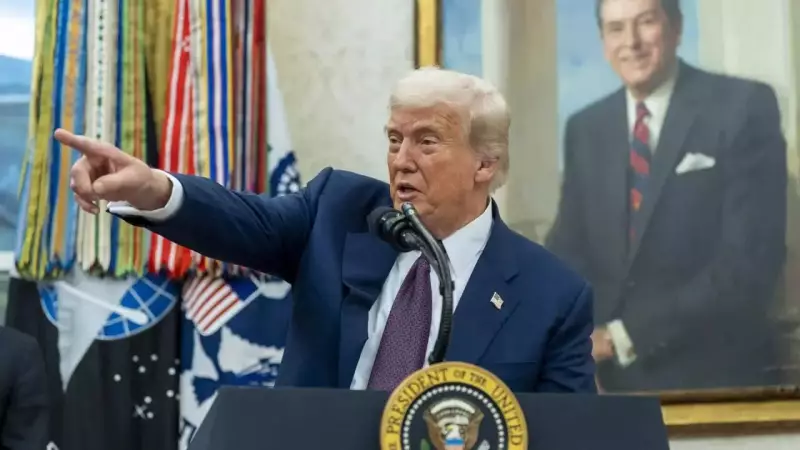
During a recent interview with Fox News, Donald Trump made comments that have sparked international controversy regarding NATO's role in Afghanistan. The former president claimed that troops from allied nations "stayed a little back, a little off the frontlines" while supporting US military campaigns against the Taliban.
"We've never needed them ... They'll say they sent some troops to Afghanistan ... and they did, they stayed a little back, a little off the frontlines," Trump stated during the broadcast. He further emphasized his perspective by adding, "It has to be a two-way street," suggesting that European nations have benefited disproportionately from American military protection.
Personal Connection to the Conflict
The UK author responded with deeply personal revelations about his family's military service. He disclosed that his son served extensively in conflict zones, including six months in Iraq followed by two seven-month tours in Afghanistan with the Royal Marines.
"He fought hard in Sangin, saw friends die, or be maimed. He bears scars of his own, and he did it because the USA triggered Article 5," the author wrote in an emotional response. His language became particularly pointed as he described Trump as a "risible, amoral fucking bastard" for what he perceived as disrespect toward allied sacrifices.
Understanding NATO's Article 5
The author specifically referenced "Article 5" in his criticism, highlighting a crucial aspect of the North Atlantic Treaty that many may not fully understand. Article 5 represents the collective defense principle that forms the bedrock of the NATO alliance.
This provision states that an armed attack against one NATO member shall be considered an attack against all members. When invoked, it creates an obligation for each member nation to come to the assistance of the attacked ally. The assistance may involve various forms of support, not necessarily limited to military force, and can include any action that Allies deem necessary to restore security in the North Atlantic area.
Importantly, NATO's Article 5 aligns with Article 51 of the United Nations Charter, which recognizes the inherent right of individual or collective self-defense for nations that become victims of armed attacks.
The Historical Invocation of Article 5
NATO invoked Article 5 for the first and only time in its history following the devastating September 11, 2001 terrorist attacks against the United States. This historic decision marked a pivotal moment in international security cooperation.
Within 24 hours of the attacks, NATO allies agreed that if the assault was determined to have originated from abroad, it would qualify as an Article 5 case. After thorough intelligence briefings, the North Atlantic Council formally confirmed on October 2, 2001, that the 9/11 attacks indeed fell under the collective defense provision.
The alliance then approved eight specific measures to support the United States, including:
- Enhanced intelligence-sharing between member nations
- Strengthened security at Allied facilities worldwide
- Access to airspace, ports, and airfields for US operations
- Deployment of naval and airborne assets for surveillance and protection
These decisions led to NATO's first counter-terrorism missions, including Operation Eagle Assist (2001-2002), which saw NATO AWACS aircraft patrolling US airspace, and Operation Active Endeavour, which launched maritime patrols in the Mediterranean to deter terrorist activities.
The Human Cost of Collective Defense
The UK author's emotional response highlights the human dimension often overlooked in geopolitical discussions about NATO and collective security. His son's service in Afghanistan—and the physical and psychological scars he bears—represents the tangible consequences of international security commitments.
This personal testimony challenges Trump's characterization of allied contributions as minimal or cautious. The author's account suggests that British troops, like those from other NATO nations, engaged in frontline combat with significant personal risk, particularly in intense battle zones like Sangin in Afghanistan's Helmand Province.
The controversy raises important questions about how military contributions are perceived and valued within international alliances, and how political rhetoric can impact the families of those who serve in multinational operations.