

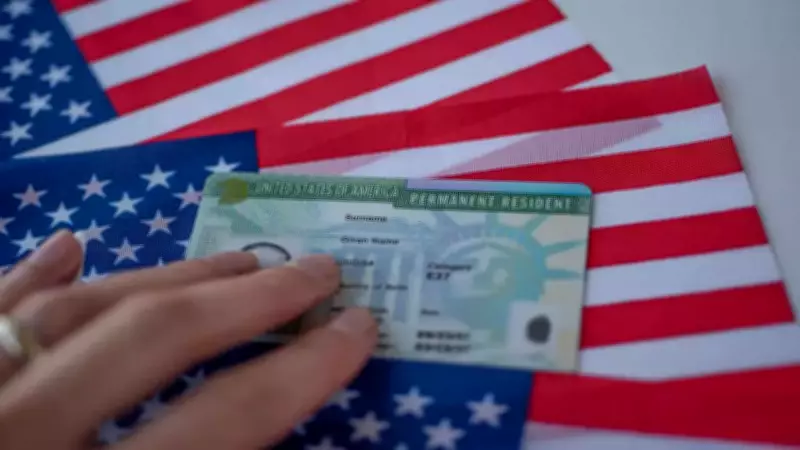
With increased scrutiny of the entire immigration process in the United States, which begins with submitting applications for a visa or a Green Card, mistakes by applicants can prove costly. However, mistakes are not always limited to incomplete forms or missing information, warned immigration attorney John Q Khosravi. According to him, the number one mistake people make in these applications is lying.
Many applicants may not lie knowingly; it could be an omission, but the U.S. Citizenship and Immigration Services (USCIS) is monitoring everything, Khosravi said. "I understand the impulse. Something happened years ago. You assume it's buried. You assume the government won't find out. That assumption is more dangerous today than it has ever been," the attorney explained, noting that USCIS has sophisticated tools to check travel history and banking records.
USCIS's Enhanced Data Access
"Over the last decade, USCIS has built access to remarkably powerful databases and resources. They can see your credit report, your banking activity, and your travel history. They are connecting dots that used to stay unconnected. Red flags that once slipped through are now surfacing before an officer even picks up the phone," he said.

"The thinking that drives people to lie is usually the same. They believe the risk of disclosure is low. They believe the upside of hiding something outweighs the downside of coming clean. Both of those calculations are wrong in today's environment, and the consequences of getting caught are severe. We are talking about denied applications, permanent bars, and in serious cases, criminal exposure," Khosravi added.
Risks Beyond Initial Applications
Another immigration strategist, Tejeshwani Singh, emphasized that even if a Green Card is obtained after suppressing some truth, the issue may resurface when applying for citizenship. "The risk calculation problem goes beyond just lying. People also selectively omit — not technically a lie, but treated the same way when discovered. The mental model of 'they probably won't find it' has never been more dangerous because the question isn't whether USCIS will find it today. It's whether it surfaces at naturalization, at a reentry inspection, or during a future application years down the line. Immigration history doesn't have a statute of limitations the way most people assume it does," Singh said.
In light of these warnings, applicants are urged to be completely honest and transparent in all immigration-related submissions to avoid severe penalties.






